Colorado does not have Big 10 money. Reports project that Big 10 schools will clear $70+ million annually in conference distributions in 2025, while Big 12 schools are generally below $50m. This gap is projected to grow over the next 5 years.
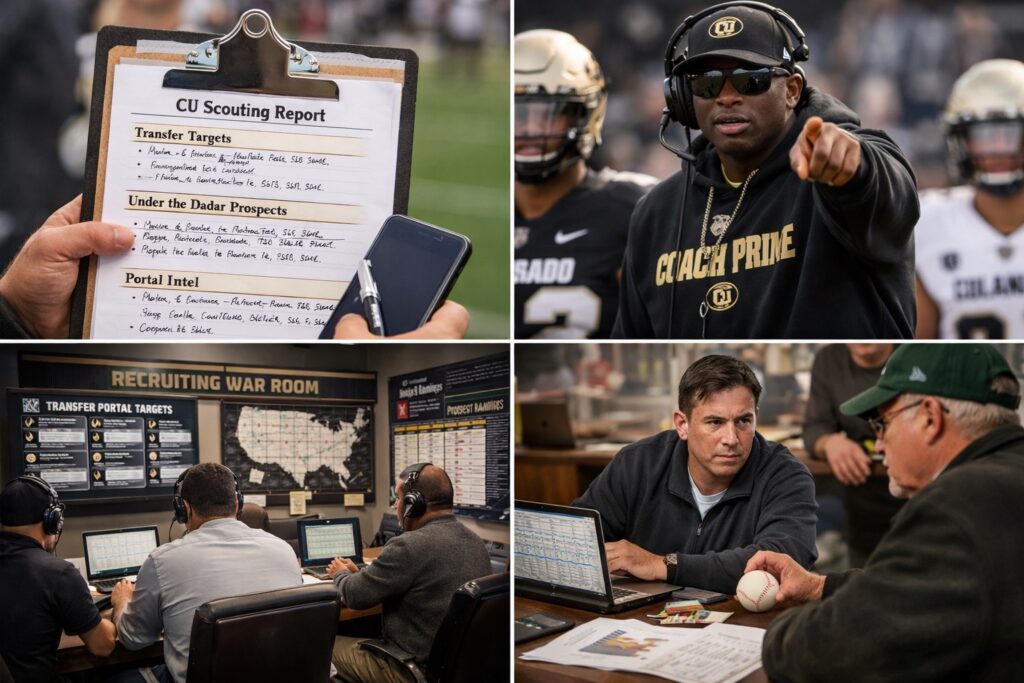
Since CU can’t outspend the Big 10 or SEC for proven players, it has to out-evaluate them. And the most efficient way to do that is not another splashy NIL outlay. It’s building an elite scouting and player personnel operation — evaluators who work all season, track rosters nationwide, identify fits early, and make fast portal decisions when the portal window opens.
In other words, CU needs to play moneyball.
Billy Beane and the Oakland As showed that a team with a smaller budget can win if it invests more than its competitors in scouting and data driven analytics, all in an effort to find undervalued talent and to gain a competitive edge without the biggest budget.
Curt Cignetti’s success at Indiana is a reminder that in today’s college football, superior scouting and player evaluation is probably the biggest competitive advantage a program can have.
CU should take notice.
CU’s Front Office Today
Colorado’s staff reflects a modern front-office spine: David Kelly (General Manager), Rodney Forsett (Chief of Staff), Reginald Calhoun (Director of Football Operations), and Reggie Calhoun Jr. (Director of Football NIL/Revenue). That’s the infrastructure you expect in a modern program.
Where CU still looks light is on the recruiting / player personnel side.
Right now, CU’s personnel operation is Darius Darden-Box (promoted from the Director of Recruiting into the Director of Player Personnel seat) plus two Assistant Directors of Player Personnel (Devin Ruffin and Joc Upton). Darden-Box stepped into the role previously held by Corey Phillips, who left Boulder for a GM position at Memphis in December. To my knowledge, CU has not replaced Darden-Box’s former Director of Recruiting post with a comparable full-time hire.
CU does have student assistants who help with the workload. But student labor shouldn’t be the foundation of a Power 4 scouting department anymore. The portal era calls for something different.
It’s time for CU to go full “moneyball” and hire more professional scouts whose full-time job is to track college football nationally, grind film, gather intel, and maintain a live board all season. It’s a better use of money to spend resources on scouting than it is to spend money on offensive or defensive quality control coaches or coaching analysts.
CU needs to hire a true Director of Scouting and add multiple additional scouts. Call it roughly $1m per year in additional expense. However, this isn’t really an additional expense — rather t’s an efficiency play. Better evaluations means fewer misses. Fewer misses means fewer wasted scholarships and fewer wasted NIL dollars on players who can’t contribute at a Big 12-winning level. Hiring more scouts could potentially save the football program money.
The need is obvious when you look at CU’s roster churn. This cycle, CU added 43 transfers and 16 high school players to its roster. With only 20 returning players, this means that nearly 75% of the players on the team are new to CU. When you’re rebuilding that much of the roster in one offseason, scouting isn’t a side project.
If Colorado wants to compete nationally, the path is clear — CU needs to win on player identification and fit. That starts with building an evaluation and scouting department that is big enough, and good enough, to give CU a competitive advantage. It’s worth some dollars to try to make this happen.
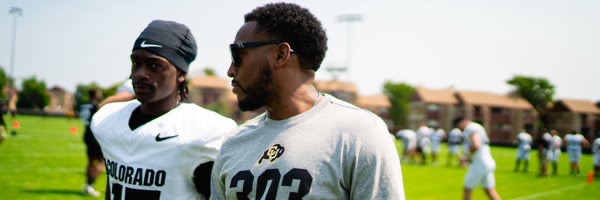
Darius Darden-Box is CU’s Director of Player Personnel.
Additional BuffsBlog Bites
–Deion Sanders rolled out a new fine system for missed time and missed responsibilities:
* Late to practice: $500
* Late to workout: $1,000
* Late to meeting or film session: $400
* Late to treatment: $1,000
* No show to practice: $2,500
* No show to workout: $1,500
* No show to meeting or film session: $2,000
* No show to treatment: $1,000
* Violation of team rules: $1,000-2,500 (depending on severity)
* Public or social media misconduct: $2,500 – $5,000 (depending on severity)
Here’s the bottom line: if college football players are going to be paid professional athletes – and that’s now what college football players are —then they should lose out on money if they don’t do what they are asked to do. In pro sports, you don’t just talk about standards. You enforce them – and money is the cleanest enforcement tool there is.
BUT — the structure of the system matters. A flat-dollar fine isn’t “equal” in a locker room built on wildly different NIL realities. A $1,000 fine hits a walk-on or a long snapper like a hammer. The same $1,000 fine for a high-NIL star player can be pocket change, something he shrugs off and forgets before dinner.
If the fine is too low relative to a player’s NIL, it becomes meaningless. On the other hand, if the fine is too high, it can seriously piss off a player that might have a legitimate excuse for the small slip-up.
And the timing is worth noting. Deion Sanders announced this after the transfer portal closed. Is this a coincidence? Probably not. It’s far easier to demand discipline when the roster can’t immediately walk out the door.
–I’m calling my shot right now. Josh Nibblets, CU’s new tight ends coach, will be a college football head coach within 3 years. Nibblets won 6 state championships at Hoover High in Alabama and 1 state championship at Gainesville high in Florida and was brought on staff by Deion Sanders. In CU’s first team meeting, he made his presence known immediately. This is worth watching.
–Aaron Fletcher is CU’s new cornerbacks coach. Former cornerbacks coach Kevin Mathis revealed that he has been reassigned and that his new title is “nickels coach.” Fletcher was most recently the co-defensive coordinator at Abilene Christian but before that was a DB coach at Missouri and Tulsa. Additionally, CU has added AJ Smith as QB coach. Smith was most recently the offensive coordinator for the San Antonio Brahmas in the XFL/USFL/whatever it’s now called.
What Else to Watch, Read, or Ignore
–Bob Hope introduces the 1986 AP All-America Team (including a CU Buff). I get a kick out of watching these old All-America review videos and wish we could do something like this today. By the way – Bob Hope is 83 in this video (!)
–Congrats to Ceal Berry on the naming of the Ceal Berry Plaza!
–Rutgers athletics hits record $78m deficit (!!!!)
–RIP to Southwest’s open seating era ($)
–The oboe has 500 parts. Turning a profit building and selling them is a killer. ($)
https://www.nytimes.com/2026/01/14/arts/music/oboe-laubin-jim-phelan.html?src=longreads
Want to read more from BuffsBlog? Check out this post that introduces the absurd concept of the Schedule Disadvantage Index™
More from BuffsBlog
- Unverified Veracity: Week 3 Practice intel, news and notes
- Unverified Veracity Looks at 5 Questions – Including is there a Big Time Silent Commitment?, How Good is Salter Really?, and is CU as Good as it Looked Against Wyoming?
- Unverified Veracity: There’s a Flaw in the Football Blueprint, Soccer Success, and Get Yourself to the Coors Event Center
I bet CU could hire high level scouts for $100k/year each. Hire 3 or 4 more scouts and have a huge competitive advantage over other Big 12 teams. Seems like a no-brainer, and I like your point that it could actually save money. Hell, spend $1m less on NIL and $1m more on scouting and you’ll probably come out ahead.
This is what I’m advocating for — spend more on scouting and bring in real pros….don’t rely on GAs and student assistants.
This is a great idea but it needs to be like the NFL. These positions need to be hired by the AD, not the HC.
One thing that this transfer portal period really hammered home is that 247/On3-Rivals stars out of HS truly do not mean all that much. 5* is one thing, but the portal is littered with so many 4*’s that transfer younger and younger, it renders these services helpful but unreliable. Programs need your own back-office staff to truly evaluate and set its own NIL market, rather than relying on those ratings. This portal session, the demand for smaller school guys with experience that played/graded well in live game snaps at G-5, FCS, and Div II seemed to jump younger HS/underclassman talent that rode the bench or played sparingly.
Agree 100%. High-level HS players are expensive. Better served to get high performing players from lower levels.
Interesting. I think coaches would balk at this but that doesn’t necessarily mean that it’s not the right move.