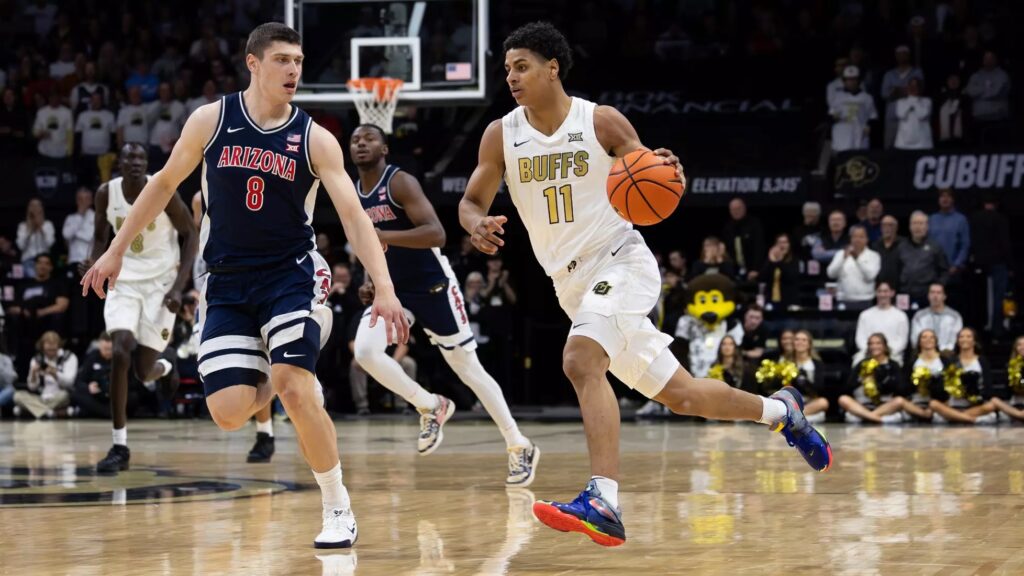
[Editor’s note: This one isn’t from me. It’s from contributor Chris Gaddis, who happens to be my brother and who has talked himself into more Colorado teams than anyone alive (myself included). I’m writing the counterpoint, and I do not agree with a word of this. Welcome him in the comments.]
Why Tad Boyle’s 2026–27 team might be better than people think
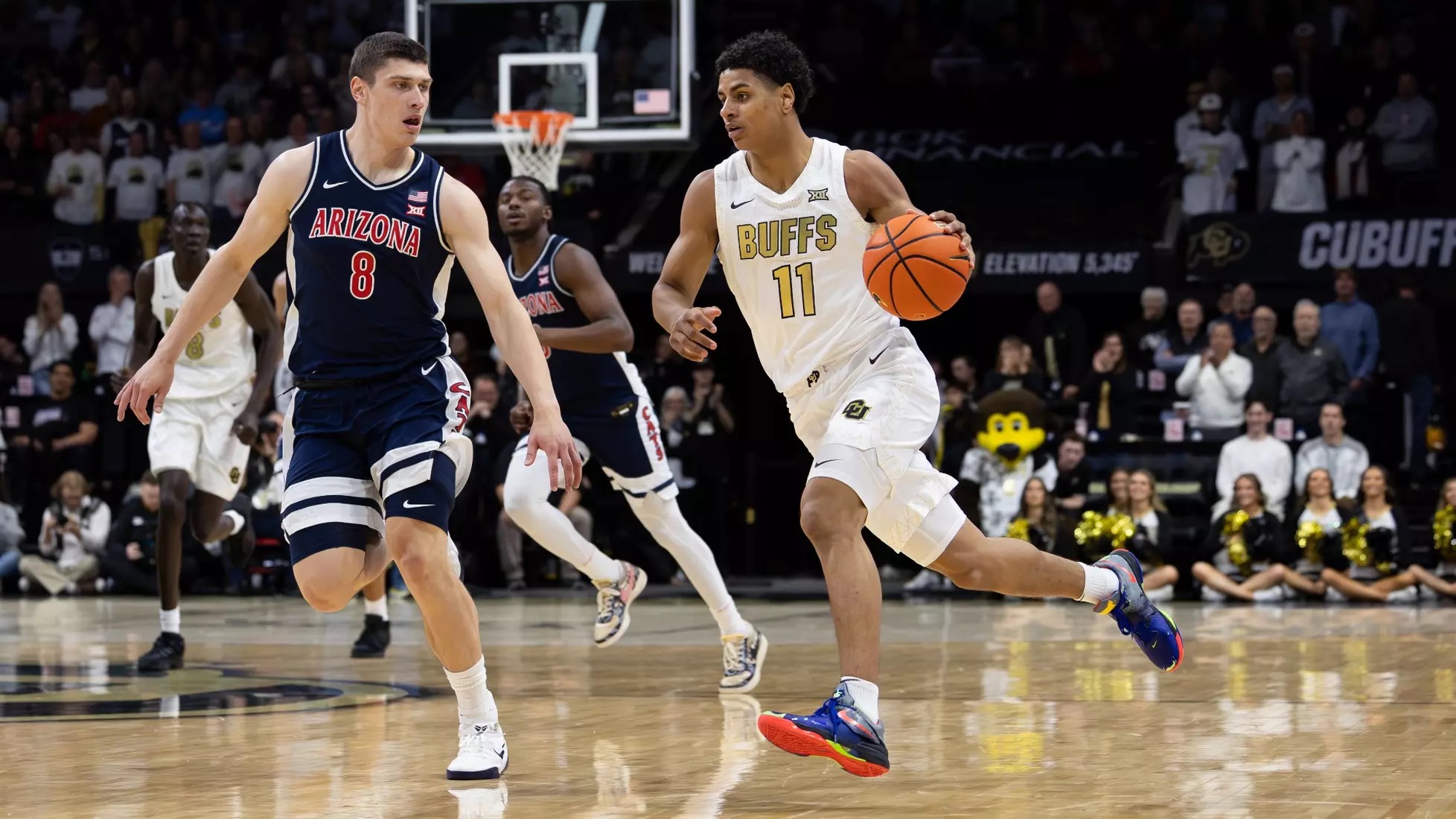
Sometime during the Buffs’ second half against Texas Tech Saturday, somewhere between disbelief and the realization that I had once again wasted a perfectly good afternoon, my mind mercifully wandered toward basketball season. And because I’m a Colorado fan, and apparently incapable of learning from decades of emotional trauma, I started getting optimistic. Dangerously optimistic. The kind of optimism that should require medication and adult supervision.
I’ve been here before. Every October, I convince myself I’ve discovered something the experts missed. By January, I’m questioning my judgment, Tad Boyle’s substitution patterns, and my general fitness to make adult decisions.
But here’s the problem. I’ve actually looked at the numbers, the returning players, and what Tad has assembled. And despite overwhelming evidence that I should know better, I keep coming back to one question:
What if Colorado’s basketball team is actually pretty damn good?
Jon Rothstein recently picked Colorado to finish 14th in the 16-team Big 12. Most preseason projections aren’t much kinder, and given the Buffs’ 17–16 finish last year, I understand why. Colorado lost its leading scorer, will depend heavily on several young players and faces a schedule that looks like it was assembled by someone with a personal grudge against Tad Boyle.
But the more I look at this roster, the more I wonder whether everyone is missing something. I’m certainly not predicting a Big 12 championship, and I’m not ready to guarantee an NCAA Tournament appearance. But could Colorado finish in the top third of the conference, somewhere in the top five or six? I think there’s a legitimate case to be made. And since it’s October, when hope is still undefeated, let’s make it.
Reason for Optimism No. 1: Last Year’s Team Was Closer Than You Think
Colorado finished 17–16 overall and 7–11 in the Big 12 last season, hardly the kind of record that inspires preseason confidence. But the underlying numbers tell a more interesting story. The Buffs averaged 80.2 points per game, shot 46.7% from the field, averaged 15.5 assists against just 10.4 turnovers and actually outscored their opponents over the course of the season, 2,645 to 2,632.
They weren’t a bad offensive basketball team. In fact, they were pretty good. The problem was that Colorado didn’t separate itself anywhere else. The Buffs allowed 79.8 points per game, opponents shot 46% from the field, and Colorado’s 35.2% three-point shooting was slightly worse than the 36.3% its opponents managed. Perhaps most troubling for a Tad Boyle team, the Buffs were actually outrebounded, 34.8 to 34.6 per game.
Think about that for a moment. Over an entire season, Colorado essentially played its opponents to a statistical draw, yet finished four games under .500 in conference play. That’s not a team that was hopelessly overmatched. It’s a team that consistently found itself on the wrong side of relatively small margins. A couple of additional rebounds, one more defensive stop or an extra three-pointer at the right moment could have changed the outcome of several games.
An optimist looks at those numbers and sees a team that wasn’t nearly as far away as its record suggested. And if that’s true, the question becomes whether Boyle has added enough talent, size and experience to turn some of those narrow losses into wins.
Reason for Optimism No. 2: The Buffs Already Have Their Point Guard
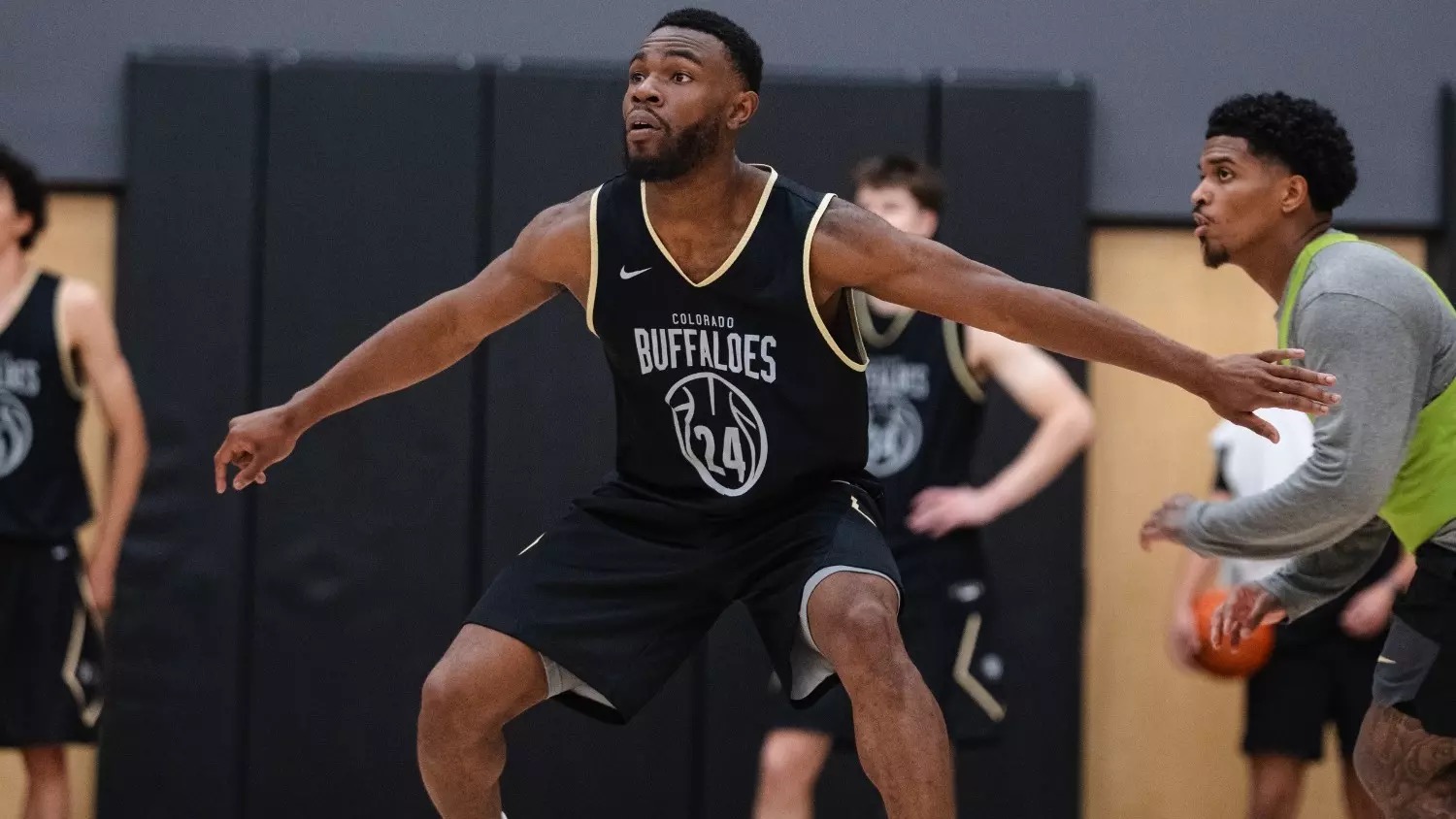
Before examining all the new pieces, Colorado already has something that many programs spend the offseason desperately trying to find: an experienced, productive point guard. Barrington Hargress returns after averaging more than 14 points and 4.5 assists per game last season, and his efficiency was even more impressive than his raw production.
Hargress shot better than 53% from the field and approximately 48% from three while logging more than 1,000 minutes. Those are remarkable numbers for a 6-foot-1 lead guard playing against Big 12 competition. In an era when teams routinely turn over half their rosters every offseason, returning a senior point guard who can shoot, create for others and take care of the basketball is a significant advantage. Boyle doesn’t have to spend November figuring out who will run his offense. He already knows, and Hargress should be even more comfortable in his second season in Colorado’s system.
The optimistic case begins with the belief that Hargress can maintain his efficiency while assuming a somewhat larger offensive role. He doesn’t need to become a 20-point scorer, but he may need to be more aggressive, particularly late in games. If he can provide consistent scoring, distribute the ball effectively and help integrate the younger players into the offense, Colorado has a foundation that is considerably more stable than its preseason ranking suggests.
Hargress isn’t necessarily going to be the best point guard in the Big 12, but he’s experienced, efficient and capable of getting the ball where it needs to go. That’s a hell of a place to start, especially for a team that will be relying on so many new faces.
The One Thing That Should Make Every Optimist Nervous
Of course, having an experienced point guard and having someone who can get you a bucket when everything breaks down are two different things, which brings us to the biggest concern surrounding this team. Isaiah Johnson is gone, and there’s no getting around how significant that loss could be. Johnson led Colorado with 16.9 points per game last season while shooting 48.6% from the field and 37.8% from three. He added 3.0 assists per game, attempted 195 free throws and scored 557 points. That’s a lot of offense walking out of the Coors Event Center and into the Moody Center in Austin.
But the bigger loss isn’t necessarily Johnson’s 16.9 points. It’s how he scored them. When a possession broke down, the shot clock was winding down and Colorado desperately needed someone to create something out of nothing, Johnson could put the ball on the floor, get into the paint, draw contact and manufacture points. Those guys are hard to replace, particularly in conference play when opponents know your tendencies and every possession becomes more difficult.
Colorado may be able to replace Johnson’s scoring collectively, and there’s a reasonable argument that Hargress, Justin Neely, the returning sophomores and several freshmen can account for those missing points. But replacing 17 points isn’t the same thing as replacing a 17-point scorer. Somebody has to emerge as the player Boyle trusts when the offense stalls and the Buffs absolutely need a basket.
Perhaps Hargress assumes more of that responsibility. Perhaps one of the sophomores develops into a more complete offensive player, or one of the freshmen proves capable of creating his own shot. The optimist believes somebody will emerge, but the realist wants to see it happen. Until Colorado demonstrates that it has a reliable late-clock creator, Johnson’s departure remains the most significant offensive question facing the team.
Reason for Optimism No. 3: Justin Neely Might Be a Monster
If there’s one newcomer who could fundamentally change Colorado’s outlook, it’s Justin Neely. The UNC Greensboro transfer arrives after averaging 17.9 points and 11.5 rebounds per game while shooting 54.2% from the field and 78.4% from the free-throw line.
Those are impressive numbers at any level of Division I basketball, but the underlying statistics are even more interesting. Neely grabbed 391 rebounds last season, second-most nationally, and his 9.1 defensive rebounds per game led the entire country. He recorded 20 double-doubles, fourth-most in Division I, and had 23 games with double-digit rebounds. He scored in double figures in 30 of 34 games, grabbed 24 rebounds in a single contest and attempted 264 free throws, making 207. That’s a grown man who attacks the basket, pursues rebounds and creates opportunities through physicality rather than waiting for something to happen.
Will Neely’s 17.9 points and 11.5 rebounds translate directly from the Southern Conference to the Big 12? Probably not. The size, athleticism and defensive sophistication he’ll encounter represent a substantial step up in competition. But here’s something I believe: Rebounding travels. Effort travels. Physicality travels. The ability to pursue the basketball doesn’t suddenly disappear because you’re playing Kansas instead of Western Carolina.
If Neely becomes a 14-point, nine- or ten-rebound player in the Big 12, Colorado has dramatically improved one of its biggest weaknesses while replacing a meaningful portion of Johnson’s missing offensive production.
Remember, last year’s team was outrebounded by 0.2 rebounds per game, while Neely averaged 11.5 by himself. That doesn’t mean Colorado suddenly becomes the best rebounding team in the conference, but it certainly suggests that Boyle has addressed a glaring weakness with one of the most productive rebounders in college basketball.
There is one caution, however. Colorado cannot afford to ask Neely to do everything. If the Buffs need him to reproduce 17.9 points and 11.5 rebounds against Big 12 competition every night just to remain competitive, they’re probably asking too much. The ideal version of this roster has Neely dominating the glass, scoring efficiently and serving as one of several offensive options rather than carrying the entire burden himself. If the supporting cast develops the way Boyle hopes, Neely won’t have to be Colorado’s entire offense to be one of the most important players on the team.
Reason for Optimism No. 4: Colorado Suddenly Has Some Size
Neely isn’t Colorado’s only experienced frontcourt addition. Noah Feddersen arrives from North Dakota State, where the 6-foot-10, 235-pound center played 99 career games and helped the Bison sweep the Summit League regular-season and tournament championships last season. He averaged 9.3 points and 5.0 rebounds while providing an efficient interior presence, and over his college career he shot 53.3% from the field.
Feddersen isn’t going to generate the same preseason excitement as Neely, but he brings size, experience and the ability to contribute without dominating the basketball. If he can provide roughly nine points, five rebounds and a physical presence in the paint, that’s useful Big 12 production.
Now put Feddersen alongside Neely. Suddenly, a team that struggled on the glass has a 230-pound elite rebounder playing next to a veteran 6-foot-10 center. Add some of the younger frontcourt talent, and Colorado begins to look like a team capable of competing physically in a conference where size and rebounding can determine the outcome of games. For a coach who has built much of his program around defense and rebounding, that’s a particularly encouraging development.
The Buffs don’t necessarily need to become the biggest team in the Big 12, but they do need to stop giving away possessions and allowing opponents to dictate games on the glass. With Neely and Feddersen, Boyle has at least given himself the personnel to make that possible.
Reason for Optimism No. 5: The Sophomore Jump Could Change Everything
Here’s where I think the national perception of Colorado may be missing something. Three of the most intriguing players on Boyle’s roster aren’t newcomers at all. They’re sophomores, and all three were showing meaningful signs of improvement by the end of last season.
Jalin Holland averaged 4.9 points and 2.7 rebounds for the year, numbers that don’t exactly jump off the page, but as a starter those averages improved to 7.5 points and 4.1 rebounds. At 6-foot-5 and 210 pounds, Holland also demonstrated the physical tools to become one of Colorado’s better perimeter defenders. Give him an entire offseason to get stronger, develop his offensive game and better understand what it takes to succeed in the Big 12, and an 11-point-per-game sophomore season doesn’t seem particularly unreasonable.
Ian Inman’s development may be even more interesting. The 6-foot-6 wing made 22 three-pointers while shooting 36.7% from deep despite averaging only about ten minutes per game. Over Colorado’s final 11 games, he averaged 6.5 points while shooting 41.5% from three, suggesting that he was beginning to figure things out against Big 12 competition. If Inman becomes a reliable eight-to-ten-point scorer who can stretch the floor, he changes how opponents have to defend Colorado, particularly with Neely operating inside.
Josiah Sanders gives Boyle something different. At 6-foot-5 and 210 pounds, Sanders can handle the basketball, rebound, defend like an absolute monster, and create for others. In his seven starts, he averaged 6.4 points, 3.9 rebounds and 2.6 assists while shooting 50% from the field. He doesn’t need to become a star, but if he develops into a dependable, versatile Big 12 rotation player, Colorado becomes a more complete basketball team.
The beauty of all this from an optimist’s perspective is that Colorado doesn’t need all three sophomores to become stars. It probably needs one to make a significant jump and another to become a dependable contributor. If Holland averages 11 points, Inman provides eight or nine with reliable perimeter shooting and Sanders contributes seven or eight along with defense, rebounding and secondary ballhandling, replacing Johnson’s statistical production starts looking considerably more manageable.
More importantly, Colorado becomes less dependent on any one player to carry the offense. That’s not a particularly far-fetched developmental scenario, especially considering all three players were already showing improvement late last season.
Reason for Optimism No. 6: Seven Freshmen Means Seven Chances to Find Something Special
Seven freshmen would ordinarily be a reason for concern, particularly in a conference as unforgiving as the Big 12. But in this case, it might actually be why Colorado’s ceiling is higher than people realize. Boyle doesn’t need seven freshmen to be good immediately. He needs two, and when you examine the backgrounds of several of these players, there’s reason to believe he may have found a couple capable of contributing sooner rather than later.
Start with Australian Goc Malual. At 6-foot-8 and 220 pounds, Malual spent last season as a development player with the Sydney Kings and averaged 10.6 points and 7.6 rebounds in NBL1 competition. At the U17 Oceania Championship, he averaged 13.8 points, 7.8 rebounds and 1.2 blocks, and at the U18 Asia Cup he averaged 8.0 rebounds. Notice the recurring theme? The kid rebounds.
Put Malual behind Neely and Feddersen, and Colorado suddenly has the potential to attack the glass in waves. He may need time to adjust to the speed and physicality of the Big 12, but his size, athleticism and rebounding instincts give Boyle another intriguing frontcourt option.
Then there’s Alex Dickeson, the 6-foot-4 Australian guard who averaged 10.9 points, 5.0 rebounds and 3.0 assists while competing against older players in Australia’s NBL1. Dickeson was the MVP of Basketball Without Borders Asia, made the event’s All-Star team, and won the three-point competition. Boyle has called him an elite passer and spoken enthusiastically about his long-term potential.
What makes Dickeson particularly intriguing is that he may offer something Colorado desperately needs following Johnson’s departure: another player capable of creating offense for himself and others. Whether he’s ready to do that consistently against Big 12 competition remains to be seen, but the combination of international experience, passing ability and offensive versatility makes him one of the more interesting newcomers on the roster.
The American freshmen offer their own reasons for optimism. Rider Portela is a 6-foot-6 wing from Sunnyslope in Arizona who averaged 13.2 points, 5.1 rebounds, 3.3 assists and 2.1 steals as a junior while shooting 86.4% from the free-throw line. He doesn’t need to become a double-digit scorer immediately, but if he can defend, rebound, attack the basket and provide 15 productive minutes on the wing, he’s another valuable piece.
Amir Jones comes from Harvard-Westlake, one of the premier high-school basketball programs in America, where he averaged 12 points, five rebounds and four assists as a senior. His team finished 27–7, ranked No. 3 in California and No. 25 nationally, while Harvard-Westlake went 124–15 and won two California Open Division state championships during his four years. Boyle has called Jones a sleeper and specifically praised his shooting and ability to defend both on and off the ball.
Again, the optimistic argument isn’t that Malual, Dickeson, Portela and Jones are all going to become immediate stars. It’s that Boyle has assembled a collection of young players with different strengths, meaningful competitive experience and enough physical talent to create legitimate competition for minutes.
If two of them become reliable contributors and a third provides occasional production, Colorado’s depth and versatility improve considerably. And if one turns out to be significantly better than expected, the ceiling rises even further. In a conference where roster depth and the ability to survive injuries or foul trouble can make an enormous difference, having several legitimate options is a luxury.
Reason for Optimism No. 7: Don’t Forget David Gomez
One of the more intriguing players on Colorado’s roster might also be one of its most overlooked. David Gomez is a 6-foot-9, 245-pound Spanish forward with a 7-foot-3 wingspan whose season at Charlotte was essentially wiped out by a foot injury. His international résumé, however, is impressive.
At the 2024 FIBA U20 EuroBasket, Gomez averaged 8.3 points while shooting 62.2% from the field, and he was part of Spain’s U18 European championship team and U19 World Cup championship team. That’s meaningful experience against high-level international competition, and while it doesn’t guarantee success in the Big 12, it suggests Gomez is more than simply another big body on the roster.
If he’s healthy, Gomez gives Boyle another physical player capable of contributing at the four or five. Combined with Neely, Feddersen and Malual, his presence could make Colorado’s frontcourt considerably deeper and more physical than it was a year ago. The Buffs struggled to establish a consistent rebounding advantage last season, but this year’s collection of big men offers the potential to change that equation. Not every one of them needs to play significant minutes, and some may take time to develop, but Boyle has more options and more size than he did a year ago. For a team that was essentially even with its opponents on the glass, that’s a meaningful place to start.
The Optimist’s Math
Put all of this together and you begin to understand why I’m not buying Colorado as an automatic bottom-four Big 12 team. Boyle returns a senior point guard who averaged more than 14 points and 4.5 assists while shooting nearly 48% from three. He adds a transfer who averaged 17.9 points and 11.5 rebounds and finished second nationally in total rebounding. He brings in a veteran 6-foot-10 center who helped his previous team win a conference championship, returns three sophomores who were playing some of their best basketball late last season, and adds an unusually interesting collection of international prospects and American freshmen. He may also have a healthy 6-foot-9 forward with extensive international championship experience.
Obviously, you can’t take statistics from the Southern Conference, Summit League, Australian NBL1, high school basketball and FIBA tournaments, add them together and assume they’ll translate into Big 12 production. That’s not how basketball works, and there’s a reason experienced coaches spend so much time evaluating how players will adjust to different levels of competition. But those numbers tell us something important: Boyle has options. He doesn’t need Neely to average 18 points and 12 rebounds, every sophomore to become a double-digit scorer or seven freshmen to play like veterans.
He needs Hargress to remain Hargress, Neely to rebound and score efficiently, Feddersen to provide a physical presence, one or two sophomores to take a meaningful step forward and a couple of freshmen to contribute. None of those things seems particularly unreasonable individually, and if several happen together, Colorado could be a dramatically better basketball team than the one most people are expecting.
That’s really the bet Boyle has made. Rather than replacing Isaiah Johnson with another proven 17-point scorer, Colorado is betting on Neely’s production, sophomore development and a deep freshman class collectively replacing what walked out the door. There’s risk in that approach, particularly when so many players will be adjusting to new roles or a higher level of competition. But there’s also upside, and perhaps more than the preseason projections acknowledge.
The One Thing That Could Ruin This Beautiful Theory: The Schedule
Of course, there’s one rather significant problem with all this optimism. The schedule is an absolute bear. If you’re betting on a young roster improving as the season progresses, you’d ideally like some time to figure things out before the games become especially consequential. Tad Boyle doesn’t have that luxury. After opening against Abilene Christian, Colorado heads to San Diego State, and a week later the Buffs travel across the country to face Providence.
Then comes a Thanksgiving tournament featuring Stanford, followed by either Grand Canyon or Saint Louis. Colorado gets Colorado State in Boulder before facing Purdue in Indianapolis. That’s a demanding nonconference schedule for a team trying to integrate seven freshmen, two major frontcourt transfers and several players assuming dramatically larger roles.
And then the Big 12 arrives, apparently determined to make the nonconference schedule look relaxing. Colorado opens league play at Oklahoma State, followed by Iowa State, West Virginia, a trip to Kansas, Houston and a road game at UCF. Those are the Buffs’ first six conference games, and there isn’t exactly an abundance of opportunities to ease into the season.
The schedule doesn’t soften much after that, either. Colorado drew Houston, Baylor and Utah twice in the Big 12’s 18-game scheduling model, with single road games at Kansas and Arizona. Its home schedule includes Iowa State, Texas Tech, BYU, Cincinnati and West Virginia, in addition to Houston and Baylor. The closing stretch could be particularly unforgiving, with BYU, Utah, Houston and Arizona all appearing late in the season, including road games at Houston and Arizona.
This is where the optimistic argument has to confront reality. Colorado could be significantly better than last year and still struggle to climb the Big 12 standings because the league is that good. If the Buffs want to finish in the top five or six, they’re going to have to beat some very good basketball teams, and home games against Iowa State, Houston, Baylor, Texas Tech and BYU can’t simply be viewed as opportunities for respectable performances. Colorado has to win some of them. The optimist believes that’s possible, particularly if the Buffs become more physical, improve defensively and develop additional offensive options. The realist understands just how difficult it’s going to be, especially early in the season when this roster may still be figuring out how all the pieces fit together.
So What Does an Optimist Actually Predict?
Let’s return to where we started. Colorado went 17–16 last season and 7–11 in the Big 12 despite outscoring opponents by 0.4 points per game, being outrebounded by just 0.2 rebounds per game and shooting only 1.1 percentage points worse than its opponents from three. Those are tiny margins, and they suggest that the difference between last year’s disappointing conference record and something considerably more respectable may not have been as large as it appeared.
Now imagine a team that rebounds meaningfully better, has an experienced point guard directing the offense, gets improved production from its sophomores and finds a couple of legitimate contributors among its freshmen. Imagine Neely becoming one of the better rebounders in the conference, Holland developing into a double-digit scorer, Inman becoming a reliable perimeter threat and Dickeson giving Boyle another offensive creator. None of those things is guaranteed, but none seems particularly unreasonable, either.
Is that enough to win the Big 12? No. Is it enough to finish in the top third of the league? Maybe, and that’s really the point. I’m not suggesting Colorado is secretly a top-ten team. I’m suggesting that the gap between where the Buffs are being projected and where they could realistically finish may be considerably larger than people appreciate.
There is certainly a version of this roster that struggles to score without Isaiah Johnson, gets overwhelmed by the schedule and finishes near the bottom of the conference. I’m not ignoring that possibility. I’m simply choosing to spend October thinking about the other version, the one where Hargress runs the show, Neely dominates the glass, the sophomores grow up, a couple of freshmen turn into legitimate players and Boyle reminds everybody why he’s been such a successful coach in Boulder.
Maybe that’s the version where a team picked 14th becomes one nobody particularly wants to play in February. Maybe it’s the version where Colorado finishes fifth or sixth in the Big 12 and finds itself back in the NCAA Tournament conversation. Is that optimistic? Absolutely. But after watching what happened in Boulder Saturday, I could use a little optimism. And unlike some of the football optimism I’ve talked myself into over the years, this one actually has some numbers behind it.
For now, let everybody else pick the Buffs 14th. I’ll take the over.
Go Buffs.
How to Watch CU Athletics This Week, Sponsored by SportsDeck
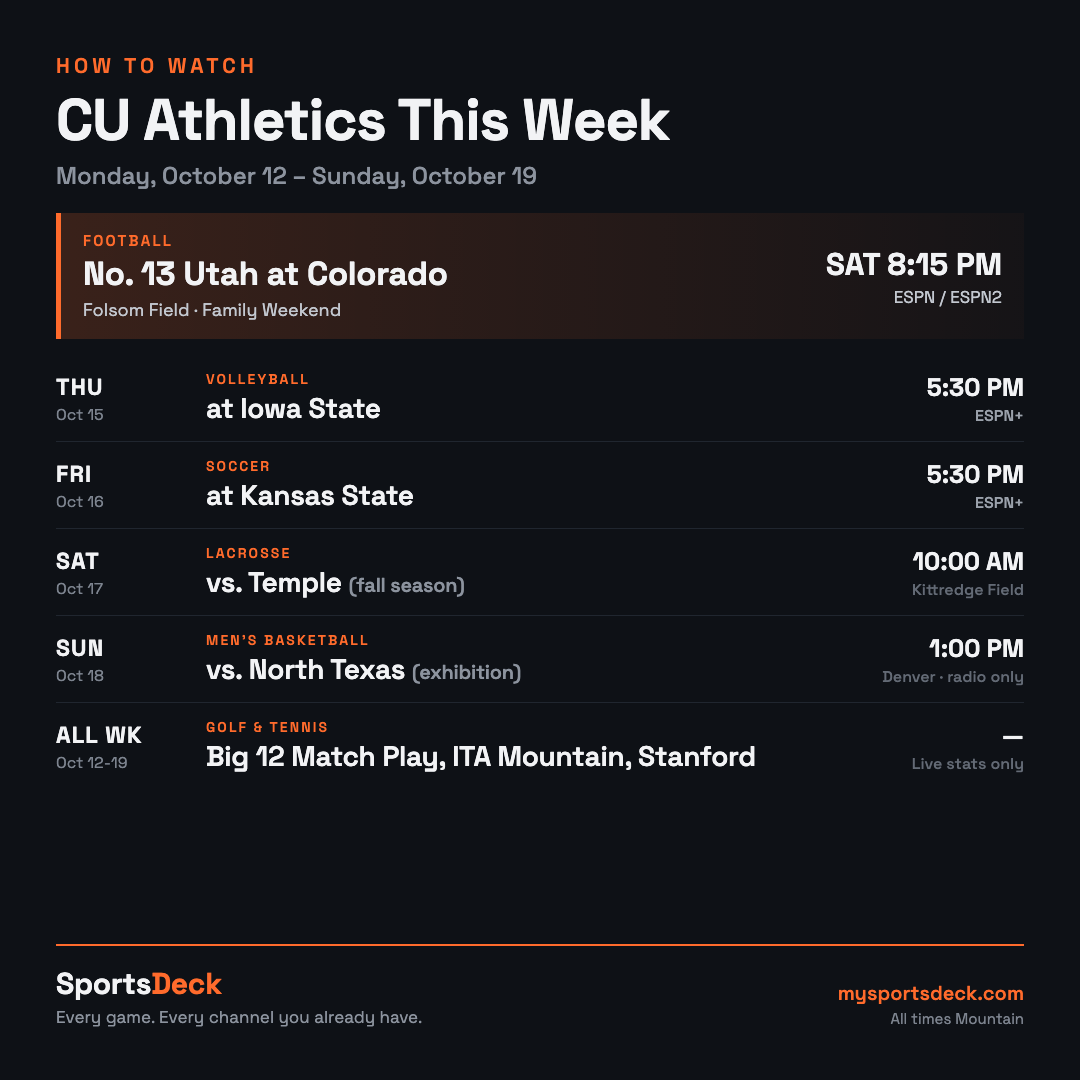
Football: No. 13 Utah at Colorado
Saturday, 8:15 p.m. Mountain on ESPN or ESPN2
Family Weekend at Folsom, and the Buffs are coming off the bye. ESPN is on every cable and satellite package. Cord-cutters: YouTube TV, Hulu + Live TV, Fubo, DirecTV Stream and Sling Orange all carry ESPN, and ESPN’s own streaming service carries it directly. The network assignment between ESPN and ESPN2 usually firms up a few days out. Radio is KOA 850 AM and 94.1 FM.
Yes, I’ll take a nap before the game.
Men’s Basketball: Colorado vs. North Texas
Sunday, 1 p.m. MT in Denver — radio only
The Mile High Hoops Classic, and the first time anybody gets to see this roster. It is an exhibition, so it will not be televised and it does not count, but if you have read everything above and want to start forming your own opinion, this is your first chance. Radio is KOA.
Volleyball: Colorado at Iowa State
Thursday, 5:30 p.m. MT on ESPN+
ESPN+ is the standalone streaming service, not the ESPN cable channel.
Soccer: Colorado at Kansas State
Friday, 5:30 p.m. MT on ESPN+
The Buffs are in Manhattan on Friday night. Also on ESPN+.
Also this week
- Lacrosse: vs. Temple, Kittredge Field, Saturday at 10 a.m. (fall season)
- Men’s golf: Big 12 Match Play, Salt Lake City, Monday through Wednesday
- Tennis: ITA Mountain Region Championship, Provo, Tuesday through Saturday
- Women’s golf: Stanford Intercollegiate, Stanford, California, Friday through Sunday
None of those are televised. Live stats and results are on CUBuffs.com.
This section is sponsored by SportsDeck, an app I built after getting tired of finding out my team had played yesterday, on a channel I already had.
Here’s how it works:
You tell it which teams you follow (there are 3,220 teams on SportsDeck across 47 sports leagues) and which streaming and TV services you already pay for. SportsDeck tells you every game your teams play, what time it starts, what channel or app it’s on, and whether you can actually watch it with what you’ve got. It can even show you whether there’s a cheaper way to watch more of your teams’ games.
Then it does the part I’m proudest of: it brings together your teams’ news, podcasts, YouTube videos, and trusted local coverage in one place—like the old sports page you miss, rebuilt for today’s world. SportsDeck has 454 of these pages, and I built and curate the whole operation.
You can also get a morning email with your games, viewing information, and biggest team stories before your coffee. There are game alerts and an iPhone widget, too.
Your first month of Pro is free. Get the iPhone app or start at mysportsdeck.com.
More BuffsBlog You Might Have Missed
Five Things I Think We Learned About CU After Texas Tech
Colorado led the No. 12 team in the country at halftime and scored seven points.

Colorado Spends $21 Million. Texas Tech Spends $40 Million. Can Congress Fix College Sports?
Chris Gaddis on the Protect College Sports Act and what it would mean for CU.
Six Things I Think We Learned About CU After Baylor
Julian Lewis threw it 2.8 yards downfield, and the numbers behind the 23-13 loss.
I love it. I’m an optimist about CU sports too and think the hoops team is being slept on. Boyle can coach defense and rebounding and Hargress can get the offense going. I think we will finish 8/9 in the B12 and be on the bubble for the tourney. Is this the year the tourney expands to 76?
[This is John – Chris may also jump in]
The tourney expansion to 76 starts next season (27-28).