[A quick opening note: it feels undeniably strange to sit down and write about / analyze coaching hires and defensive schemes while fighting is ongoing in Iran. On a day like today, the “real world” feels much larger than CU football. My heart is with those affected. While I hope this post offers a small, welcome distraction from the weight of the news, I do not want to minimize the gravity of what is happening in the Middle East. Stay safe and be kind to one another, friends. Let’s keep those affected in our thoughts and prayers.]
When Rob Livingston left his post as Colorado’s defensive coordinator for the NFL, it created a vacuum that demanded a thoughtful replacement, especially given the number of inexperienced hires already on staff under Deion Sanders.
Enter Chris Marve.
Before we look at the changes Marve will bring to CU’s defense, though, we need to address some real concerns about CU’s coaching staff.
CU defensive coordinator Rob Livingston took a demotion, and presumably a pay cut, to get out of Boulder. Livingston was the highest paid coordinator in CU football history as he was set to make $1.7m in 2026. He left Boulder to work under Denver Broncos defensive coordinator Vance Joseph and defensive backs coach Doug Belk as the Broncos’ “pass game coordinator.”
The truth is that this move is a step down from defensive coordinator. Why would Livingston make this move?
According to several sources with knowledge of the program, the working relationship between Deion Sanders and Robert Livingston was defined by “real friction” and minimal communication over the past year. While this didn’t always manifest as open hostility, a disconnect existed behind the scenes. In any successful program, a head coach and his coordinators must be in lockstep; at CU, that alignment simply vanished. This lack of collaboration ultimately made it impossible to build the staff continuity required to win at this level.
Was the strain significant enough to push Livingston toward the exit? In isolation, maybe not. But when the alternative was reuniting with a trusted former colleague in Vance Joseph — someone Livingston worked with during their time with the Cincinnati Bengals — the decision becomes easier to understand. Livingston’s move suggests that whatever disconnect existed in Boulder was meaningful enough that Livingston preferred a lesser title (and presumably less money) in a familiar environment over continuing in a strained one.
Livingston’s move reinforces a message that I’ve heard from several folks circling the CU football program: landing established, veteran position coaches under Deion Sanders is difficult. As a result, Colorado has leaned into upside hires — young coaches, strong recruiters and high-energy fits, but without Power Four coaching resumes. We’ve seen that this off-season with new defensive line coach Dante Carter (previously a CU GA and NAIA position coach), tight ends coach John Niblett (a successful high school coach in Georgia and Alabama), and running backs coach Johnnie Mack (a former GA at Colorado).
None of these hires are automatically problematic. But collectively, they do increase the developmental curve for the staff. When you’re rebuilding a roster after a 3-9 season, you ideally want as many steady hands as possible guiding that progress. Having almost entirely new players on the field is one thing – having youth and inexperience on the headset at the same time increases the degree of difficulty.
For perspective, I follow Michigan almost as closely as I follow CU (I’m a proud grad of both universities). This offseason, Michigan rebuilt Sherrone Moore’s staff almost entirely with coaches who carry significant Power Four experience. The situations at the two programs are different — resources, stability, and recent success all matter — but experience level is not insignificant. Right now, Colorado is asking a relatively inexperienced staff to grow up quickly in a league that punishes inexperience.
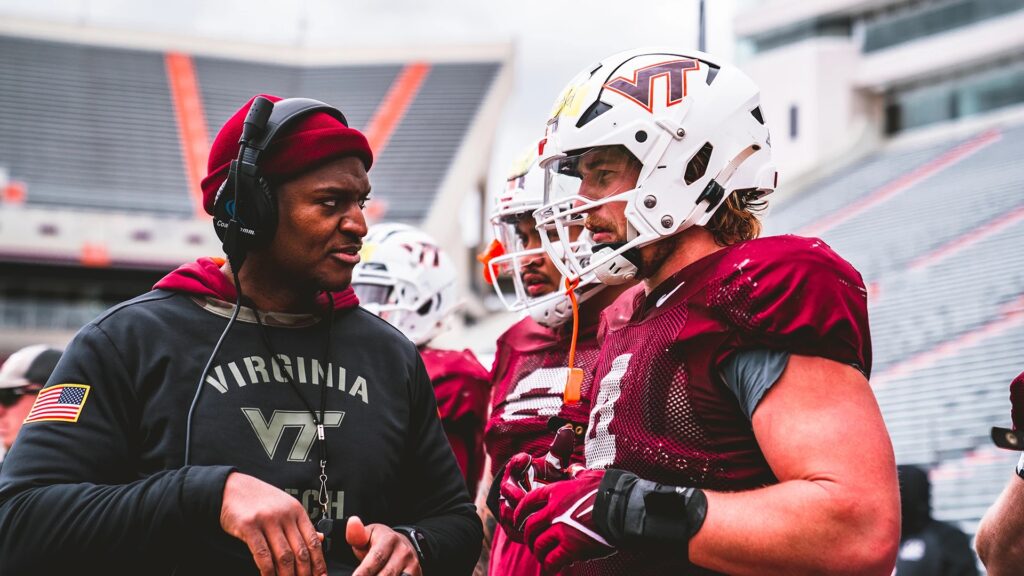
The encouraging counterbalance is at the coordinator level. Both Brennan Marion and Chris Marve bring meaningful outside experience to Boulder. Marve, originally hired as linebacker coach to replace Sanders’ long-time friend Andre Hart, was named defensive coordinator after Livingston’s exit. As a result of Marve’s promotion, Hart (again, with little outside coaching experience) is presumably back to coach CU’s linebackers.
To put this simply, while the overall staff profile skews young and inexperienced, the most important decision-makers now have real résumés behind them.
Enter Chris Marve
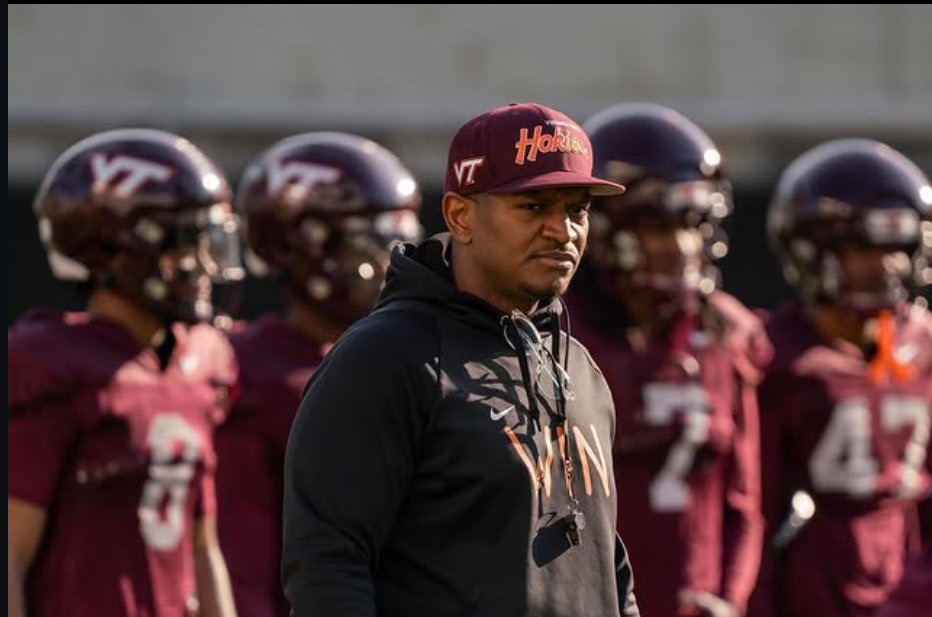
Marve served as the defensive coordinator and linebackers coach at Virginia Tech from 2022 through the 2024 regular season. The Hokies ranked No. 13 in the 14-team ACC in scoring defense in 2022 but improved to seventh in the conference in the category the following season. Virginia Tech then ranked third in the ACC in scoring defense in 2024 but Marve was fired after the season.
Why did Virginia Tech head coach Brent Pry fire Marve in December 2024? Someone had to be the scapegoat of the Hokies 6-6 season, and the Hokies’ repeated second-half meltdowns were blamed on Marve. Despite keeping offenses in check early, the defense routinely got worn down and surrendered big plays late in games. Pry—a defensive-minded head coach himself—opted to hit the reset button to save his own job (which he ended up losing the following season anyway).
Marve began his coaching career at Vanderbilt, his alma mater, as a defensive quality control coach in 2014 and eventually was promoted to Vanderbilt’s inside linebackers coach from 2016-18. Marve also served as linebackers coach and was the defensive recruiting coordinator at Mississippi State in 2019, then the linebackers coach at Florida State in 2020 and 2021.
How Will CU’s Defensive Scheme Differ in 2026?
Livingston’s standard 4-2-5 defense was born from his decade-plus in the NFL, primarily as a safeties coach for the Bengals. It is a secondary-driven scheme built around a 2 high-safety look. While it worked well in 2024, once the NFL poached CU’s top defensive talent, the flaw in Livingston’s defense – specifically, a lack of creativity and aggressiveness in the front seven — was exposed. The Buffs lacked the ability to create havoc at the line of scrimmage and didn’t have enough run-stopping physicality.
Unlike Livingston, who tends to view the defense from the secondary forward — structure first, coverage integrity first, explosives eliminated at all costs – Marve builds his unit from the inside out.
While he still operates frequently out of a 4-2-5 front, his system is linebacker-driven. His units are built on physical run fits and simulated pressure at the line of scrimmage. Marve’s defense is constructed, first and foremost, to stop the run at the point of attack — not to spill it wide and rally. Under Marve at Virginia Tech, the Hokies mixed man and zone concepts and frequently showed eight-man pressure looks before the snap to stress protection calls and force quarterbacks into hesitation.
The difference is philosophical as much as schematic.
Livingston’s structure was often about containment and leverage — keep the lid on the defense, keep everything in front, force 10-play drives. Marve’s approach is about disruption. His simulated pressures are designed to create negative plays without necessarily sending six. Marve’s defense uses controlled aggression to manufacture confusion.
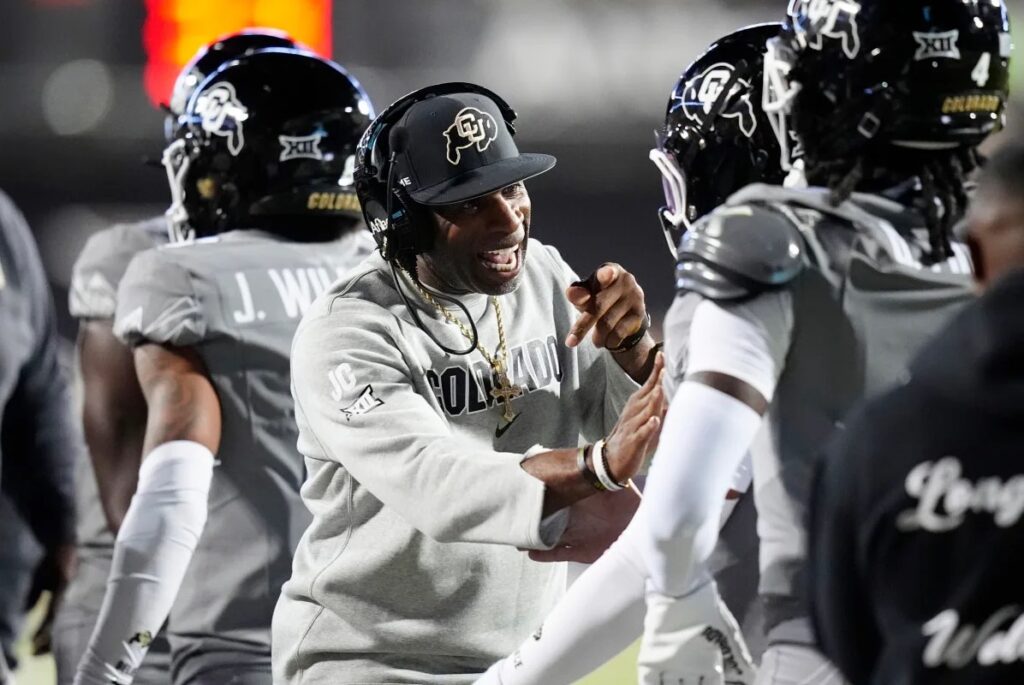
Rob Livingston’s departure underscores real concerns about staff cohesion and experience under Deion Sanders. But Chris Marve offers real experience and past success. He’s coached Power Four football, built a solid Power 4 defense, and understands how to manufacture disruption without sacrificing structure. If Colorado is going to close the gap in the trenches and compete weekly in the Big 12, it won’t happen through upside hires. It will happen through disciplined, physical, organized football. Marve gives CU a chance at that.
Now we’ll see if the rest of the operation supports it.
Odds and Ends / What Else To Read and Watch
–The Athletic predicts who will be coaching each Power 4 team in 2030 ($). Spoiler alert for CU fans: our next head coach is apparently going to be current Wisconsin QB coach Kenny Guiton.
https://www.nytimes.com/athletic/7067868/2026/02/27/college-football-power-4-coach-predictions-2030
–President Trump is convening a roundtable meeting this week involving college sports’ heavy hitters (including the four power conference commissioners, key athletic directors, and former coaches including Mack Brown, Nick Saban and Urban Meyer) to discuss college sports reform.
–Why Vail Resorts is losing skiers in a growing industry:
–I went to the ‘rasslin show last Wednesday. And then this broke out:
–“Why you’re more likely to develop AI psychosis than to join a cult.” A fascinating read:
https://nautil.us/why-youre-more-likely-to-develop-ai-psychosis-than-to-join-a-cult-1270352/
–“Lords of the Ring: the Cultural Politics of Sumo Wrestling.” Sumo wrestling was one of my “deep dives” over the last few years, and I probably know more about sumo than 99.99% of people. This article is a fascinating look at the collision between sport and Japanese culture, and I learned a lot from it. This is well worth your time.
https://harpers.org/archive/2026/03/lords-of-the-ring-joshua-hunt-cultural-politics-sumo-wrestling
Want to read more from BuffsBlog?
Yes, you do. Here’s a story about Richard Young, and why he may be the biggest difference maker on CU’s offense this upcoming season.
If you’d rather read about projected defensive starters for Chris Marve (and holy smokes there’s a lot of new players on CU’s defense), check out this story:
Really interesting stuff. I think readers can read between the lines and see that you’re trying to be artful in your criticism of Deion Sanders, but this is definitelly more critical than what any other established media source is writing or talking about. If you look at the CU sponsored state media, there’s only rainbows and lollipops. I appreciate you keeping it real.
First, we’re not an “estabished media source” so I stopped reading your comment after that. 🙂
Second, I don’t want this post to be read as me being overly critical. There is always nuance and multiple perspectives on things. However, I think it’s disingenous to write about CU football and not talk about some of the issues that clearly exist.
Third, thanks for reading!
I’m actually more optimistic about the coaching staff this year than last year. Marion is a clear upgrade over Shurmur, and Livingston never really showed me much. Yes, some of the position coach hires are concerning, but overall we’re in good shape.