Who has two thumbs and enough misplaced confidence to project Colorado’s starting defense before a single spring practice rep?
This guy.
Predicting a depth chart in February is a fool’s errand, and lucky for you, you’ve found the right fool for the job.
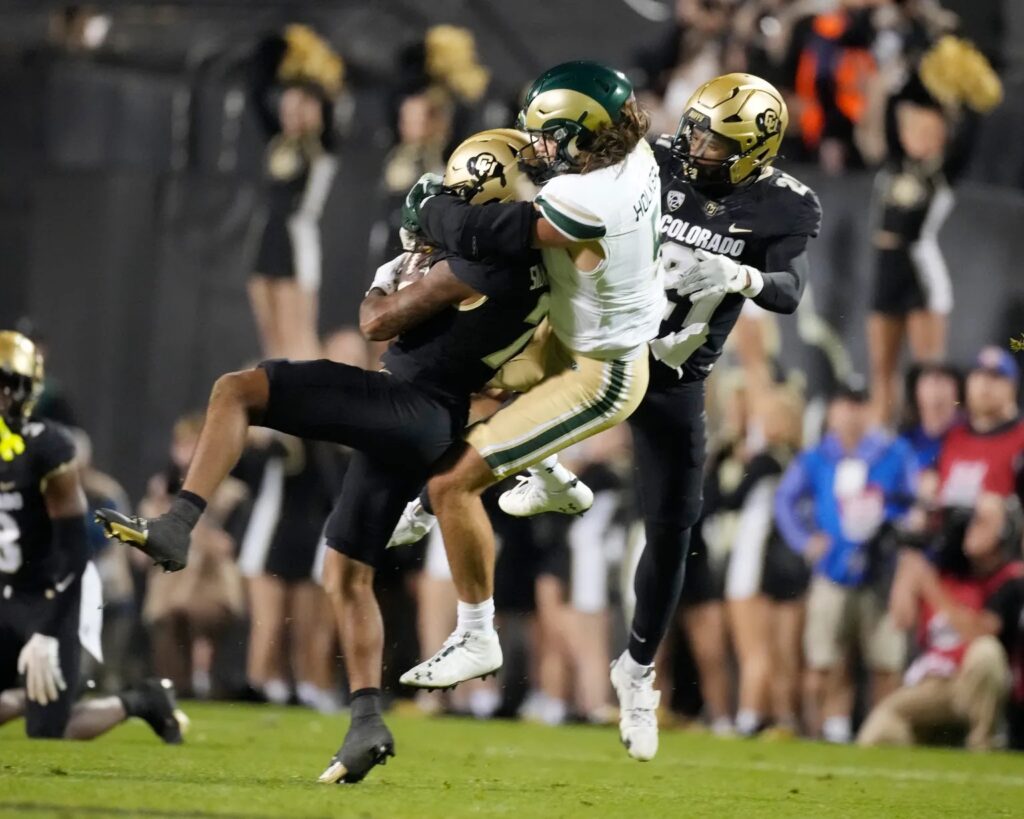
I made calls to several sources, and tried to read some tea leaves. Most insiders are generally in “wait and see” mode regarding the defense, but there’s definitely some optimism that this year’s defense will be much, much better than last year’s defense……which isn’t saying a ton, because, well, if we’re being honest:
Last year’s defense was historically bad.
We’re talking 425 yards per game (dead last in the Big 12) and a staggering 6.14 yards surrendered per snap. “Oof” doesn’t quite cover it; it was a sieve.
When Robert Livingston was hired, he noted that his plan is to win early downs and then do the “fun stuff” on 3rd downs (exotic pressures, stunts, disguised coverages, etc.) The problem is that it’s tough to do “fun stuff” when you’re facing second-and-3 all game.
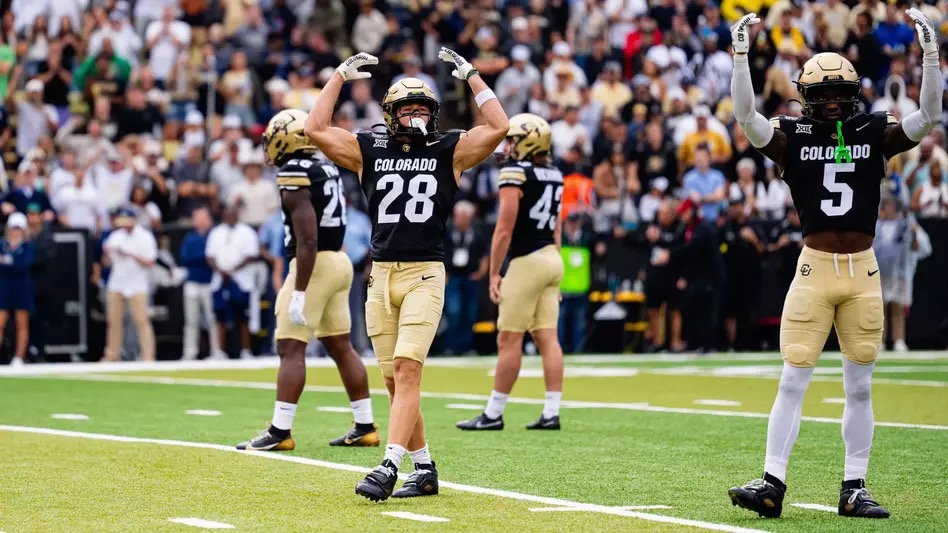
From an Xs and Os standpoint, CU predominantly runs a 4-2-5 with 4 down linemen (2 edges, a DT and a NT), 2 linebackers, and 5 defensive backs (2 cornerbacks, 2 safeties and a nickel).
In this defensive scheme, CU places most of the run-stopping impetus on the DT (who plays a 3-technique by lining up on the outside shoulder of the strong-side guard) and the NT (who plays a 1-technique by lining up on the weak-side shoulder of the center). I still have real concerns about whether the NT is good enough to stop the run this upcoming season.
CU will rely heavily on NTs Sedrick Smith (315 pounds), Dylan Manuel (300 pounds), Tyler Moore (297 pounds) and Samy Taumanupepe (375 pounds) to man the nose guard position. Unfortunately, none of these players is proven at this level. Sedrick Smith was primarily a special teams player for Maryland last season and had a 56.5 PFF grade, Dylan Manuel had the 7th highest ranked PFF grade for Appalachian State’s defense last year, Tyler Moore was only a part-time starter for Coastal Carolina last season, and Samy T (I’m not typing his last name again) played only 49 snaps over 3 seasons and finished last season with a 49.2 PFF grade
Without a proven NT, I expect to see CU play more “bear” formation. In the bear formation, DC Robert Livingston will walk a linebacker up to the line of scrimmage to stand over the center/A gap. This gives CU’s defensive front 5 players on the line of scrimmage and puts 3 defenders on the three interior OL, as both guards and the center will be covered (by the NT, the DT and the LB). This creates one-on-one pass rush situations on the outside for the edges and will tighten interior run lanes…but also makes the defense susceptible to play action and the tight end passing game.
It’s not all doom and gloom, however.
At the DT position, I expect Santana Hopper to be the starter and to be very good (if undersized). For a full-blown post on the uber-athletic Hopper, check out:
At LB, CU should have the best linebacker duo that it’s had since the Nate Landman / Carson Wells duo in 2020. I fully expect both Gideon Lampron and Liona Lefau to play at “future NFL draft pick” levels. This would be a giant leap in productivity over this past season’s Martavius French / Reginald Hughes / Jeremiah Brown triumvirate.
The Two Defensive Variables
Note there are two key variables that can change the arc of the defense.
The first is Ezra Christensen’s eligibility battle against the NCAA. That battle remains unresolved as of today. However, given the Trinidad Chambliss case last week, I suspect that the NCAA will grant Christensen another year of eligibility. However, no one has ever accused the NCAA for doing the right thing, so it’s never a done deal until it’s, you know, a done deal.
If Christensen is deemed eligible, he’s probably a better fit at DT than NT. Given CU’s issues at NT, however, I wouldn’t be shocked to see both the 280-pound Christensen and the 265-pound Hopper lining up next to each other regularly. If that happens, CU would have the smallest defensive line in the country.
The second variable is Randon Fontenette. We wrote a full-blown post on Fontenette at:
He has unique run defense skills from his (quasi) safety position. As I wrote, if Rob Livingston plays him at least 75% of the time as a “box safety,” he can provide much needed run support. Last season at Vanderbilt, Fontenette was one of the better run stuffing players in the SEC. In fact, Vanderbilt’s coaches recognized that offenses typically ran away from Fontette’s side of the defense to avoid him. This was made possible because Vanderbilt’s defensive coaches didn’t disguise which side of the defense Fontenette was playing on before the snap. Rob Livingston, on the other hand, likes to use two high safeties before the snap, rotating one player into the box only after the snap. This should make it more difficult for offenses to intentionally run away from Fontenette.
If Livingston uses him correctly (and the jury’s still out on Livingston), he’ll really help CU’s run defense.
Projected Starters
CU recruited 6 edge players out of the transfer portal. However, we believe that returnee Quency Wiggins will hold them off to land one of the starting edge positions. Wiggins played 162 defensive snaps last season and finished with nine tackles, one TFL, and six QB hurries. The “six hurries on 162 snaps” math (about 3.7 QB-hurry events per 100 snaps) is fine for a rotational defender but needs to be higher if he’s going to be a starter, especially in a defense that needs four-man pressure to prevent the back end from living on an island.
Wiggins has every physical tool that exists in the physical toolbox. However, he hasn’t put it together yet. We think he’ll start to put things together this season. If he doesn’t, CU has some depth here and I expect that Lamont Lester Jr. and Immanuel Ezerogu, among others, will be ready to go.
Snap projection (2026 season): 450.
Expected production range (projection): 20–30 pressures/hurries, 4–7 TFL, 3–6 sacks. The pressure number is the swing stat; sacks often follow once the pressure rate becomes consistent.
DEFENSIVE TACKLE (3-tech): Santana Hopper (and a note on Ezra Christensen)
Hopper is the clearest “tool + production” addition in the interior. The Athletic’s Bruce Feldman ranked Hopper the #45 athletic freak in college football in 2024, ranking him higher than some random running back named Ashton Jeanty (who finished #54). No defensive tackle in college football was clocked as fast in-game as Hopper’s 20.0 mph (the next fastest defensive lineman was 18.7 mph). He can motor.
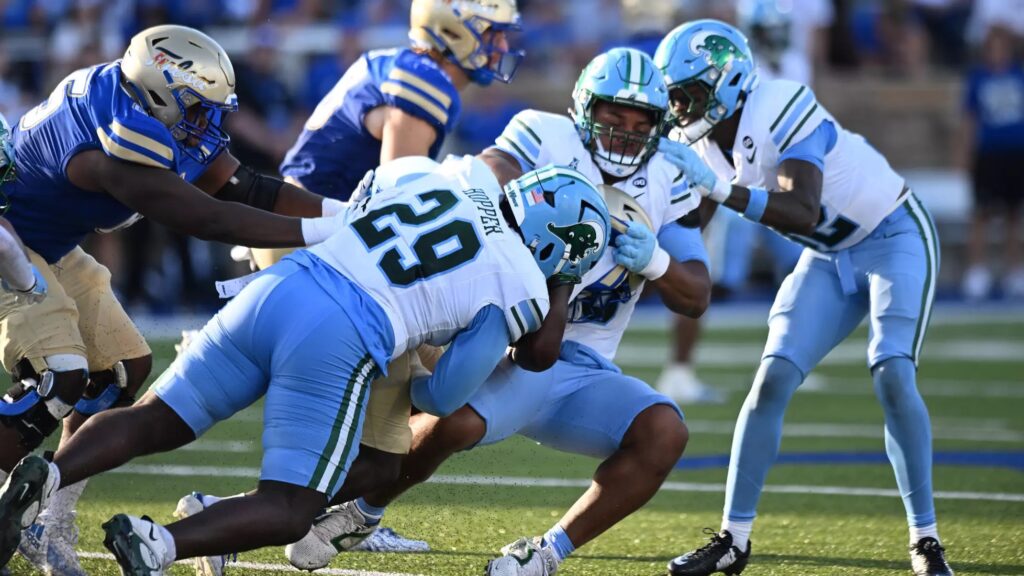
He’s also productive. During the 2025 campaign, Hopper recorded a career-high 10.5 tackles for loss and 4.5 sacks. Analytics from PFF indicate that Hopper was the highest-graded defensive player on the Tulane roster among those with a significant snap count. And remember, dear readers, that Tulane played in the college football playoffs last season. He generated 39 quarterback pressures, ranking him near the top of all defensive tackles nationally. This ability to collapse the pocket from the interior is a rare skillset that immediately caught the eye of the Colorado scouting department.
Snap projection: 500–600 (assuming Christensen is eligible; if not, he’ll play 750+ plays)
Expected production range (projection): 35–45 pressures, 7–12 TFL, 4–6 sacks. Interior pressures matter more than sacks in this defense because they compress the QB’s platform and speed up checkdowns that defenders can rally to.
Quick note: As noted above, if Ezra Christensen is eligible, he’ll probably play some 3-tech and some (very undersized) NT. Christensen’s 2025 season at New Mexico State was impressive (42 tackles, 11.0 TFL, 6.0 sacks, and 10 QB hurries in 11 games. PFF notes that he had 40 pressures on 494 defensive snaps, which translates to about 8.1 pressures per 100 snaps and is excellent interior production.
Assuming eligibility, I’ve heard that Christensen will be the NT “closer” on third downs alongside Hopper. On 1st and 2nddowns, he may split time with Hopper at DT.
NOSE TACKLE: Sedrick Smith
Duck and cover, fans.
In 2025 at Maryland Terrapins, Smith totaled seven tackles. In fairness (?) to him, however, he played only 121 defensive snaps. The nose’s job is unglamorous: hold the point, reduce vertical displacement, and keep linebackers clean so second-and-7 happens. Smith will get the chance to prove that he can do this in a starting role as he’s the only player on CU’s roster that has played this position against big time competition. In any event, I expect that Smithy, Dylan Manuel, Tyler Moore and Sammy T will all play 200+ snaps. Let’s pray to the football gods that they can be average.
Snap projection: 250-350.
Expected production range (projection): modest box-score numbers (20–25 tackles).
EDGE: Toby Anene
Anene’s 2025 season with the North Dakota State Bison included 7.0 sacks and 8.5 tackles for loss. PFF credits Anene (since 2024) with 13 sacks, 71 QB pressures, a 90.1 pass-rush grade, and a 15% win rate, massive numbers that are consistent with a high-end edge profile regardless of level.
For 2025 specifically, Anene had an 83.7 overall PFF grade, and played 470 defensive snaps while recording 38 pressures (about 8.1 pressures per 100 snaps). That’s the kind of rate that lets a defense stay structurally sound because you can rush four and cover with numbers.
As noted above, CU has depth at DE. I’ve been told by sources that all of the transfer DEs will play meaningful snaps this season.
Snap projection: 450–550.
Expected production range (projection): 50–60 pressures, 8–12 TFL, 6–10 sacks.
LINEBACKER: Liona Lefau
The 6’1” 227 pound Lefau had 68 tackles, 3 TFLs and a fumble return for a touchdown for the Longhorns last season. He has played in 41 games in his career with the Longhorns, and is coming off of 23 consecutive starts. I talked to a Texas football expert and he told me it’s a “sure thing” that he’ll be an NFL linebacker.
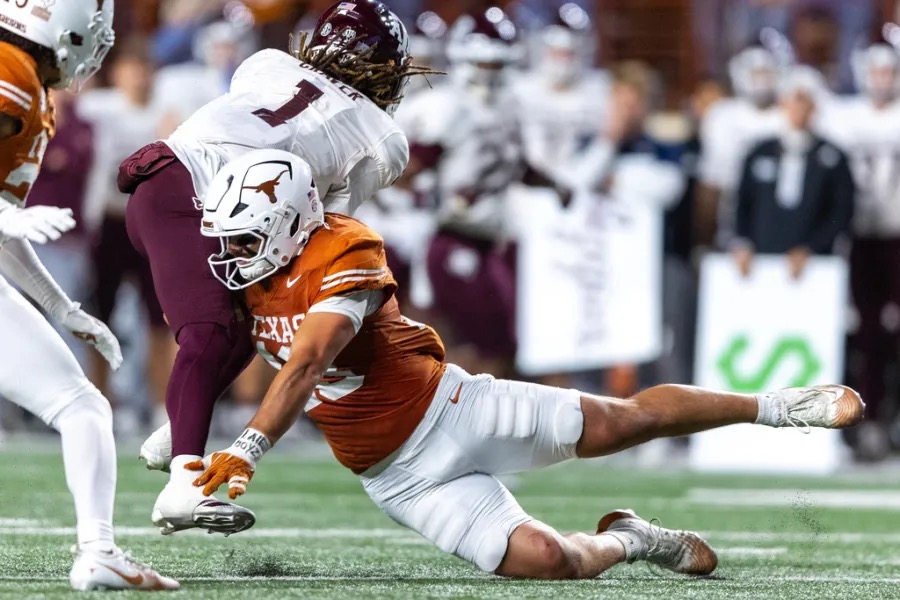
He is a very strong run defender, finishing with a 76.4 PFF grade against the run last year and a a 61.7 PFF overall grade last year. In the 2024-25 season he finished with a 64.6 PFF grade. He immediately gives CU a high-level, quality starting LB.
Snap projection: 650–750.
Expected production range (projection): 85–100 tackles, 4–8 TFL, 1–3 sacks.
LINEBACKER: Gideon Lampron
Lampron is a stud and could be an All-American candidate for the Buffs. He finished last season with 95 tackles and 9 QB hurries from his linebacker position, where he was a team captain and first team All-MAC. He had an 86.4 PFF grade last season (!) while earning honorable mention All-American honors from Phil Steele. Prior to his time at Bowling Green, Lampron was an FCS All-American linebacker for the Dayton Flyers. It’s fair to expect that the 6″ 220-pound Lampron (and his counterpart Liona Lefau) will immediately become one of the best players on CU’s roster.
Snap projection: 650–750.
Expected production range (projection): 85–100 tackles, 10–15 TFL, 3–5 sacks.
SAFETY: Randon Fontenette
Fontenette is the X factor for CU’s defense. In 2025 at Vanderbilt Commodores, he posted 52 tackles, 6.5 TFL, six pass breakups, and five QB hurries. He played 790 defensive snaps in 2025 and recorded a 68.4 PFF grade.
Fit: if Colorado’s nose rotation holds up, Fontenette becomes the safety who can rotate late and still arrive on time in the alley. If the nose doesn’t hold up, he becomes the team’s weekly firefighter—high tackle counts, but also high exposure. He’s not a great cover player.
Snap projection: 650–750.
Expected production range (projection): 50–70 tackles, 6–10 TFL opportunities (especially against perimeter run and screens), and steady PBUs if Colorado leans on split-field coverage rotations. `
SAFETY: Jah Jah Boyd
Boyd is the smallest-sample, highest-upside projection in the secondary. Last season, the former Indiana Hoosier recorded seven solo tackles and a forced fumble across 47 defensive snaps, and that PFF graded him at 90.1 while allowing one catch for nine yards. He intentionally shut his season down after 4 games to maintain an additional year of eligibility.
There’s no way around it: 47 snaps is not predictive modeling. Still, his tape is impressive. Boyd has played some cornerback, and with Fontenette at one safety position, he’ll be CU’s designated “coverage” safety. Naeten Mitchell may push for playing time here, too, but there are concerns that he doesn’t have the coverage chops that CU will need at this safety position opposite Fontenette. Mitchell had 58 tackles last season for New Mexico State and finished the season with a 67.8 PFF grade last year. I like MItchell — I just think Boyd is a better fit next to Fontentte given Boyd’s coverage skills.
Snap projection: 450–550 (depending on how quickly he earns trust in communication and fits).
Expected production range (projection): moderate tackle totals, with value tied to coverage stability.
NICKEL: Boo Carter
Carter is a modern nickel and a big-time punt returner.
Carter was a member of the 2024 SEC All-Freshman Team selection as a defensive back and return specialist but was dismissed from the program this past November after several run-ins with coaches. When properly motivated, Carter is an above average safety and could be one of the most dangerous punt returners in college football.
In his time at Tennessee, Carter had 63 tackles, 7.5 TFL, two sacks, three forced fumbles, and an interception. As a punt returner last season, Carter averaged 16.5 yards on 12 punt returns with six returns of 20+ yards.
Carter finished the 2025 season with a 64.7 PFF grade, good for 14th among Tennessee defenders that played more than 100 snaps.
Snap projection: 550–650 (nickel as base). Now for an important caveat: this is dependent on Carter moving beyond his “knucklehead” past tendencies.
Expected production range (projection): 55–65 tackles, 4–6 TFL, 1–3 sacks.
CB: Justin Eaglin
Justin Eaglin will be CU’s number one cornerback.
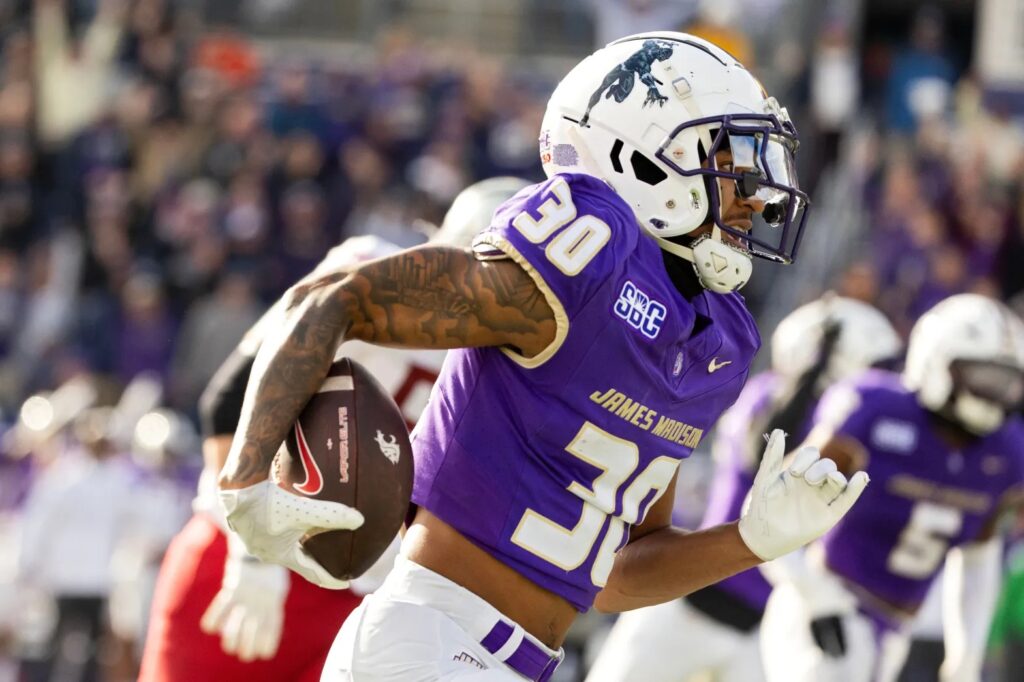
Eaglin was named first team all-conference at James Madison, where he had 35 tackles, 8 PBUs and 5 interceptions last year, including one in the college football playoff vs. Oregon. Eaglin is a very strong run defender from his cornerback position. The 6’1″ 175-pound Eaglin finished the season with a very strong 75.1 PFF grade.
Snap projection: 650–750.
Expected production range (projection): 3–5 interceptions (turnovers regress), 7–12 PBUs, and a completion-allowed rate that stays closer to the low-50s than the mid-60s.
CB: RJ Johnson
RJ Johnson started the first three games of 2025 but missed the following eight games due to injury. As a result, he finished the season only eight tackles, one interception, and one pass breakup. However, if he’s healthy, his size and continuity should matter in a room built on turnover and competition. Another name to watch here is Emory Floyd. Floyd, a 6’1” 195-pound corner, had 35 tackles last year at Appalachian State and finished the year with a 69.5 PFF grade. He was named honorable mention All-Sun-Belt last year.
Snap projection: 550–65
Expected production range (projection): modest tackling stats, with success defined by availability and by whether he can reduce target volume across the season.
What Else To Read/Watch (and Other Random Musings)
–Next year, the House settlement payment amount increases to $21.3m. It’s interesting to me to see what other teams are doing. CU’s biggest competitor in the Big 12 right now is probably Texas Tech, and the tweet below is a fascinating look at how they’re approaching rev share this upcoming season. The most interesting thing to me in the tweet is that Tech has asked Adidas and Learfield, two of its biggest corporate partners, to direct money that is otherwise payable directly to Texas Tech to players/NIL. To reiterate, they’re taking shoe deal money and radio/sponsorship money and asking corporate partners to pay player NIL instead of the athletic department/university.
College football is totally broken.
–TikTok is fueling a global black market on….parrots?
–Where to find America’s movie-magic places, a state-by-state reference to locations used in recent(ish) movies. ($)
Here’s the Colorado entry: “On Pikes Peak Highway and Monarch Pass: In a spectacular stunt in the “Fast & Furious” series, five cars are dropped in “Furious 7” from the back of a cargo plane for a parachute landing onto winding roads. The Rockies represented the Caucasus Mountains in Azerbaijan.”
https://www.wsj.com/arts-culture/film/americas-movie-magic-places-59834003?mod=hp_listb_pos2
–Another dollar, another congressional bill to “save” college sports. Practically speaking, this will never pass. However, the NCAA needs to focus politicians first on a narrower bill that addresses college eligibility. They won’t.
–“They wanted a university without cancel culture. Then dissenters were ousted.” A fascinating look at the University of Austin, a start-up university based entirely on principles of free expression and academic freedom.
https://www.politico.com/news/magazine/2026/01/16/civil-war-university-of-austin-bari-weiss-00729688
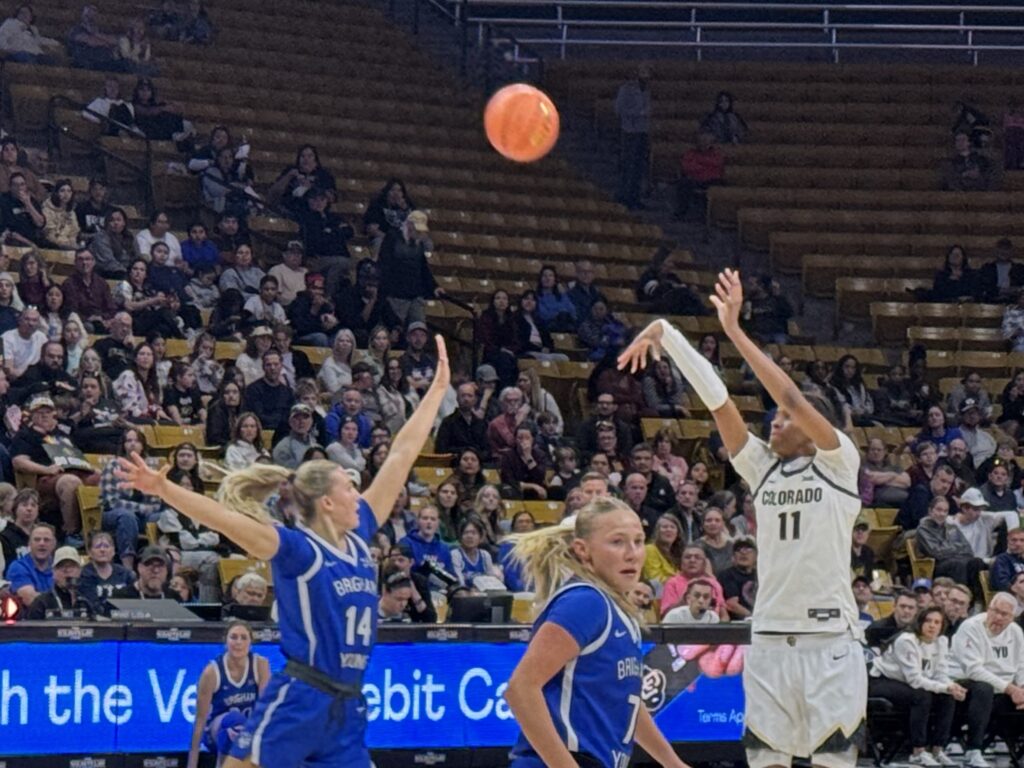
–The CU women’s hoops team is starting to put things together. I was at the CU vs. BYU game on Saturday, and Colorado absolutely dominated the Cougars. CU won 76-46 in a game that wasn’t as close as the score may indicate. CU was led by Anaelle Dutat’s 19 points and 10 rebounds, Jade Masogayo’s 15 points and 8 boards, and Desiree Wooten’s 16 poits, 6 rebounds and 7 assists.
JR Payne’s team is getting better as the season is progressing (cough Tad Boyle) and now is sitting firmly on the NCAA tournament bubble.
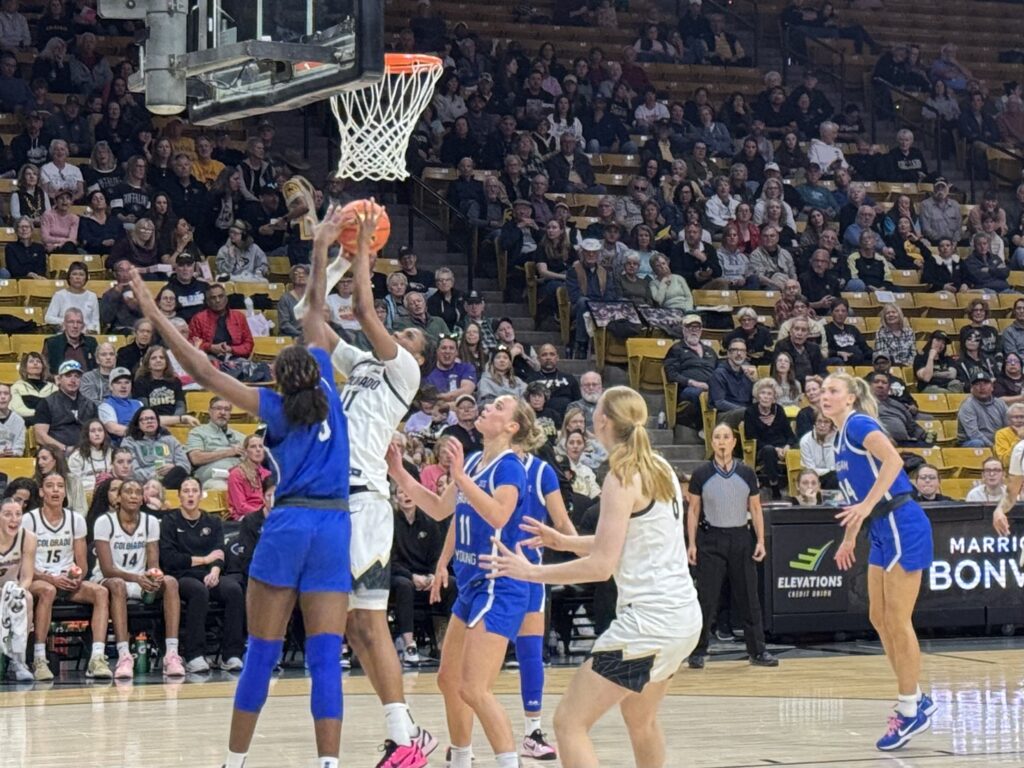
Colorado has a massive game this Saturday night in Boulder against 20th ranked Texas Tech. Win, and CU probably has played itself into the NCAA tournament. Lose, and it will take a win against Utah and BYU, and maybe one game in the Big 12 tourney, to get into the Big Dance.
Do yourself a favor and go to the CU Events Center this Saturday night. The women on the team deserve to play this game in front of a big home crowd.
–Want to read more from BuffsBlog? (and by the way, you’ve already read thousands and thousands of words — what’s a few more?). Check out this story on how the men’s basketball team’s polite defense is sabotaging the team’s effectiveness.
And if you haven’t read the feature on the SEC captain turned CU difference maker, check out this story that has received some great feedback:
The best. Great stuff.
Thanks Mike.
I think having 2 quality inside LBs should help significantly against the run, even if we’re undersized up front. Love reading this kind of thing to pass the long offseason.
Awesome article with great content. LB’s playing better will be huge. You mentioned Carter Stoutmire, however I think he transferred signing with Arkansas. Maybe he came back? If not, I was sad to see him depart. Fingers cross for Ezra. Just putting all the pieces together will be a big challenge for BL and his staff. Certainly, it will be a “wait and see,” but I like that teams will not have any film on us, so if BL changes some things up we might surprise a few teams early. I’m hoping that we play more disciplined (assignments/gap control) and just faster–both mentally and physically. IMO, both the read and react time and pursuit was slow last year. Staying healthy will be huge as well. Last year, we lost so many guys to injuries, opt-outs, and some guys mailing it in.
You’re right about Stoutmire – he transferred to Arkansas. Brain fart. Thanks for your thoughts — and keeping guys engaged/healthy is definitely a key. There’s little continuity anyway, and injuries will further erode continuity.
Great article. A few posts ago you linked an article, “AI 2027”. Completely changed my perspective on the industry and kick-started a new interest. Great find on the article and i’ve sent to a number of friends. I’ll link it below for anyone who missed it.
https://ai-2027.com/
Thats great, glad to hear you thought it was interesting!