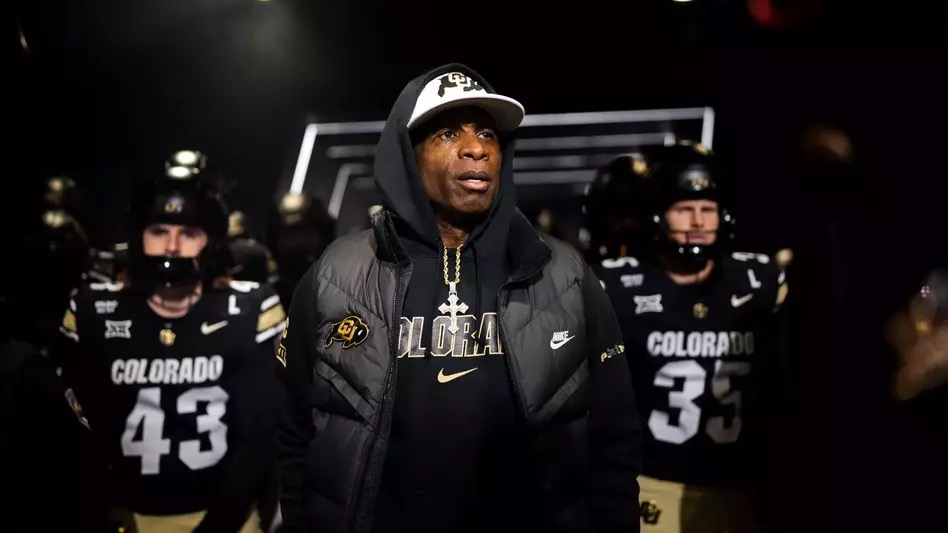
CU’s football season mercifully came to an end on Saturday in a 24-14 loss to the Kansas State Wildcats.
If you read social media, you’ll see that there’s very little nuance regarding CU’s disappointing season. Everything is sensationalized and emotionally charged. There’s a simplification of complex issues into binary positions – Deion Sanders is God / Deion Sanders needs to be fired yesterday – that make it difficult for thoughtful analysis.
At this point, I have major concerns about whether Deion Sanders will be successful at Colorado. However, it also needs to be mentioned that it’s very possible that this program has needed Deion Sanders. CU was headed for the halls of irrelevance given the current climate of college football and Deion Sanders made CU very relevant.
We hope he can do that again.
However, there are massive issues within the CU football program right now. Let’s dive in and take a nuanced look at where things are and how things can be improved:
-First, some stats to place CU’s season in historic context. CU just had their 2nd worst season in the last 11 years with a 3-9 record and Deion Sanders’ overall win/loss record at Colorado is now 16-21. This is simply not good enough for a man that is paid over $10 million per year to win football games – by far the highest (publically available) salary among Big 12 coaches.
—“Hey, at least we’re not as bad as we were during the Karl Dorrell years….right?”
From a statistical standpoint, this year’s team was worse than Dorrell’s 2021 team better than Dorrell’s 2022 team.
In 2021, Karl Dorrell led the Buffs to a 4-8 season. Dorell’s offense averaged 18.8 ppg (121st/130) and the defense averaged 26.7 ppg (72nd/130). Thus, in 2021, CU was -7.9 points per game on average.
This year, the Buffs finished 3-9. The offense averaged 20.9 ppg (finishing 114th / 134) and defense averaged 30.5 ppg (110th/134). Thus, CU was -9.6 points per game on average.
TL/DR: Dorrell’s 2021 team would probably be 2-point favorites over CU’s team this season.
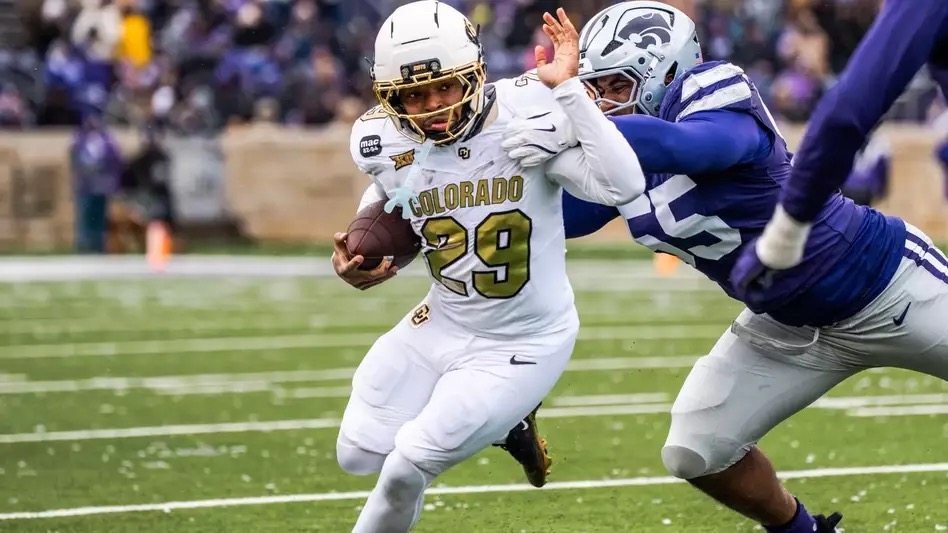
–Now for some nuance. While CU lost a lot of games this year, CU was close to several big wins as noted by Brian Howell. Against Georgia Tech, CU was tied 20-20 with 2 minutes left. Against BYU, CU led 21-17 in the 4th quarter. Against TCU, the game was tied 21-21 in the 4th quarter. CU was down 22-19 in the 4th quarter against West Virginia, down 21-17 in the 4th quarter against Arizona State, and down 17-14 in the 4th quarter against Kansas State .
CU was close in a lot of games and needs to improve on the margins to win more.
–So how is CU going to improve?
Deion Sanders isn’t changing the way he constructs a roster, and this is a massive problem.
Deion Sanders says that recruiting high school players is risky because a large percentage of them don’t make meaningful contributions and simply “jump in the portal,” creating roster instability.
Deion Sanders asked listeners to check the statistics so folks can “understand the method to his madness.” The short answer is that there is no method to the madness regarding CU’s roster construction.
Per LockedOnBuffs, in the 2023 class, Colorado signed a total of 52 transfers. 12 graduated/declared for the draft, 24 transferred after 1 year or less, and 16 stayed and contributed multiple years. 36 (69.2%) of the portal signees were not with the program the following year. So there was a hit, or retention, rate of 30%.
In the ’24 class, CU landed 43 transfers. 12 graduated/went to the NFL, 16 transferred, and15 stayed. Therefore, 28 (65%) of the portal adds from last year are not with the team anymore. There was a hit, or retention rate, of 34%.
CU needs to recruit more high school kids. The thing about high school recruiting is that you can develop relationships for 2-3 years and establish a loyalty to the program and a connection that helps keep players in the program. By having more “program players,” you also create a team-first culture as opposed to a me-first culture….which is a problem with this year’s team.
–Signing day is this Wednesday (yes, really). CU has only 10 players committed. It’s imperative that CU add at least 17 high school players between Wednesday and the February 4, 2026 signing day. Unfortunately for CU, the large majority of high school players that sign with Power Four teams will sign this Wednesday. This is not positive.
—“But BuffsBlog, CU can’t compete because it doesn’t have the money.”
This is wholly incorrect. CU’s athletic department revenue is top 3 within the Big 12. CU’s NIL outlay is also top 3 within the Big 12 (per public comments about CU spending the full $20.5m NIL kitty + conversations with folks inside the program). Colorado isn’t losing games because it’s outgunned financially relative to its Big 12 peers — Texas Tech excepted.
Colorado is not poor, folks. That excuse doesn’t fly and it needs to die.
Relatedly, CU will lose some big name transfers this off-season. We’ve heard of several big names that coaches expect to transfer this off-season — names that will surprise folks. The good news is that these out-transfers will open up a lot of money that will enable CU to bring in proven “up-transfer” players, as long as that’s a focus of the transfer portal. Speaking of the transfer portal…..
–If Deion Sanders is hellbent on living and dying in the transfer portal, he needs to focus much more on “up-transfers” as opposed to taking 4 and 5-star high school players that couldn’t get playing time at an SEC or Big 10 school.
Indiana is the model here. Last year, Indiana brought in 27 transfers – 21 of which were from a Group of 6 or FCS team. All 21 of those “up-transfers” from a lower-level program had a real impact at their previous stop, and this impact translated at the Power Four level. In fact, 8 of the 21 players went on to earn All Big 10 designation.
CU needs to recruit successful FCS and Group of 6 players as opposed to backups from Georgia or Alabama. For more on this, see:
–If Deion Sanders is going to be successful at CU, it’s because he made necessary changes after this season.
He needs to fire his unqualified friends and hire qualified coaches who have worked their way up through the coaching ranks.
He and his staff need to be in the field recruiting, not sitting in the Champions Center expecting players to come to him. He needs to put in the work with high school recruiting.
He needs to hire people to assist with clock management and decision making.
He needs to hire an offensive coordinator with an innovative offense that works at this level – and then get out of his way and let the new coordinator lead the offense. Sanders is a better CEO than Xs and Os coach.
He needs to change the culture within the football program from a “me” focused program to a “we” focused program. This culture shift will be much easier if he recruits more high school players. Distractions needs to be minimized, not sought out.
He needs to change the way he constructs the roster — recruit more high school players and “up-transfer” players while recruiting fewer “down-transfer” players.
If he does these things, he can be successful. And while I have significant doubts that he will make these changes, I’ll be cheering for him to make it happen. His future at CU depends on it.
If you want to read more in the CU Buffs blogosphere, check out the Athletic Director Hot Board, only at:
Fantastic work.
I don’t think Coach Prime has the humility to make a lot of these changes. CU’s on the hook for $33m if it fires him, though, so I don’t think that’s going to happen. In today’s college football world, however, a $33m buyout isn’t the end of the world (which is crazy).
Deion Sanders isn’t getting fired.
And you’re right that college football buyouts of $30m+ are absolutely insane — and getting more common.
Thanks for the kind words and thanks for reading.
I have a hard time agreeing that Deion made Colorado football relevant again. Does hype really equal relevance? There’s no question he brought attention and exposure but I don’t think the actual football has been relevant. Two terrible seasons sandwiched around a smoke and mirrors 9-win season where CU avoided playing the 3 best teams in the conference (and got boat raced playing one of those three in a bowl). CU football is still completely irrelevant, but Deion Sanders has such overwhelming charisma, the cameras just can’t look away.
In today’s world, I think hype = exposure/relavance (at least to high school / college kids). Is that how it should be? Probably not. But Deion Sanders has brought eyeballs to CU.
The big question is whether that will continue — and for it to continue, CU needs to win. For CU to win, Deion needs to make some big changes.
Thanks for posting, and thanks for reading!
(Love the blog! Should have lead with that in the last post…)
In year 1, it was all about “Coach Prime”, not “Colorado Football” and that was a smart approach. No top recruit was going post “Offered by Buffs” on their Instagram, but “Offered by Coach Prime” carried weight.
The problem is that it’s still all about Coach Prime, not Colorado Football. Colorado Football is still a bad brand, which why I’d argue he hasn’t made it relevant. Now that Deion’s personal shine has started to dull, the entire program is irrelevant.
I fear he’s going to have a brutally difficult time recruiting both the coaches and the players needed to turn the program around.
Thanks for the kind words.
That’s a really interesting take on selling the Coach Prime brand vs. the CU football brand. I haven’t thought about that before but I think you’re onto something. It sure bums me out that the CU brand is at such a low point relative to its historic value (which is something that new CU fans don’t really understand).
If you haven’t watched ‘Bye Bye Barry’ it is well worth your time. It was interesting to see the polar opposites of the two Sanders in that NFL draft. Barry was the epitome of grind it out teammate while Deion was all flash. Barry >>Deion all day long in my book and nothing taken away from either person, they were both great players.
First, I really enjoy the posts on buffsblog.com – thank you!
I am mostly in agreement with your assessment. I support Coach Prime and hope he makes the necessary changes. But I think he values NFL experience over college recruiting/coaching experience and so I don’t think we will see enough of the right changes.
For NIL, I don’t worry about Big 12 teams poaching players. Maybe Texas Tech, BYU or Utah but no others. Where we cannot match up is with most Big 10 or SEC schools where it is a combination of $ and exposure (and conference bias come NFL draft time).
Last, for your “hit” or retention rate, you should not include portal senior/grad teansfers – they can’t be retained and it artificially inflates your negative metric.
That’s it, looking forward the the next blog post. Sko Buffs!
Hi Dave. Thanks for reading.
I think you make some good points. However, CU’s exposure has been as good as most Big 10/SEC schools thanks to Deion. Will this continue? Not if CU isn’t winning.
Regarding the “hit” rates, one of the downfalls of signinig grad transfers/seniors is you only get them for one year. That’s a cost of using the transfer portal. So I do think it’s relevant to the overall continuity within the program.
Anyway, I appreciate your thoughts. Please chime in more regularly!
Move Sub Prime into a GM role and bring in coordinators who can take control of the game and develop players. Rebuild the offensive and defensive lines, and make a statement on the ground in the Big 12.
“Sub Prime” hurts a little. Hopefully it’s Optimus Prime next season.
We have definitely seen that trying to piece an OL together every year doesn’t work. You can bring in one, maybe two players but bringing in four or five year to year doesn’t pan out.
CU football is lipstick on a pig at this point and when the lipstick is smeared away, you still have the pig.
On one hand, Sanders brought exposure to the program and that exposure benefitted mostly the bubble around the program (increased applications to the university, money into the community, money to Sanders, Inc., etc). On the other hand, the exposure did not lead to laying a sound foundation in which gains could be made from year to year. A flashy house on poor foundation is not going to endure.
The blueprint, IMO, is Utah. Coach stability, local players that want to stay in-state and are proud of their university and program, and continuous support by the community. CU had that in the late 80s-90s-and early 2000s.
I refuse to believe that there is no talent in Colorado and that high school recruiting is futile. Sanders, et al, are poor evaluators and are looking for diamonds instead of diamonds in the rough (HS or portal). Arguably, one direction is more difficult but it is the direction of foundation, IMO.
Sanders is not going anywhere at this point. He is either going to finish his contract out or retire due to medical issues. I hope he is willing to significantly change some of his ways, get some real coaches not just friends and former players, put some time into recruiting young players, and looking for diamonds in the rough.
He understands being part of something successful as a teammate and he understands business success as the CEO of his family corporation but does he understand what it takes to building an enduring program? Time will tell, I hope he figures it out sooner verses later.
As always, I enjoy your blogs and I enjoy the fact that people can actually have meaningful discussions here verses the social media yelling matches.
Thanks for reading and the kind words!
There’s a lot here.
I would prefer a Utah-style build, too — but getting a Kyle Whittingham-type coach is hard to do. Those guys aren’t growing on trees. I understand why CU went after Deion Sanders — it was an attempt to gain eyeballs after 20 years of wandering in the wilderness. I just hope Sanders recognizes that big changes need to be made to create a winning program that has some continuity and stability that can last after Sanders leaves.
I also agree that the state of Colorado is under-recruited. The population of Colorado has grown so much, and there are a lot of good HS football players here. While I don’t think you can have a strong Power 4 conference team comprised primarily of Colorado players, CU should go after the top 10 or so players every year in the state. To me, our failures to recruit Colorado is a bit of a chicken or the egg question — do the kids not want to come to Colorado because we don’t recruit them aggressively enough, or do the kids not come to Colorado because so many transplants live here without allegiance to CU? I suspect both of these factors contribute to our failures in Colorado.
Again, thanks for reading. Please feel free to chime in more!
A Whittingham type coach is definitely hard to find, his roots are in Utah so that helped with this tenure.
Does Colorado still have that law prohibiting long-term contracts with public employees? That always seemed to be the rub with assistants and stability.
Fielding a team primarily of Colorado players is unrealistic but 5-10 is realistic and would help push the program forward locally. Texas Tech may have went on a spending spree but they have a some key players that are local talent. I think having some locals helps with the team culture and gives insight to others about what makes the program special.
No idea what happened with CU recruiting CO talent but it seems like the problem stems from CU’s end, after all, they hold the cards and can offer/not offer. I think that the scandal of the early 2000s, the self-imposing sanctions, and lack of administration support were what ultimately killed the program. From there on, no one was able to get it up and running again.
Sanders can solidify his legacy by creating the stability we all want to see. It is a lot of work, maybe more than he bargained for, and I hope he has the energy for it. Seeing if he has the mindset of meaningful change will be interesting and the current situation may be the lowest point of all his careers (although he would never admit to that IMO).
I konw there was a bill a couple of years ago that passed in the Colorado legislature that permitted a certain # of long-term state contracts, so the long-term contract issue is essentially dead.
Pingback: Colorado 2026 Recruiting Class Roundup: The Offense Edition - BuffsBlog.com