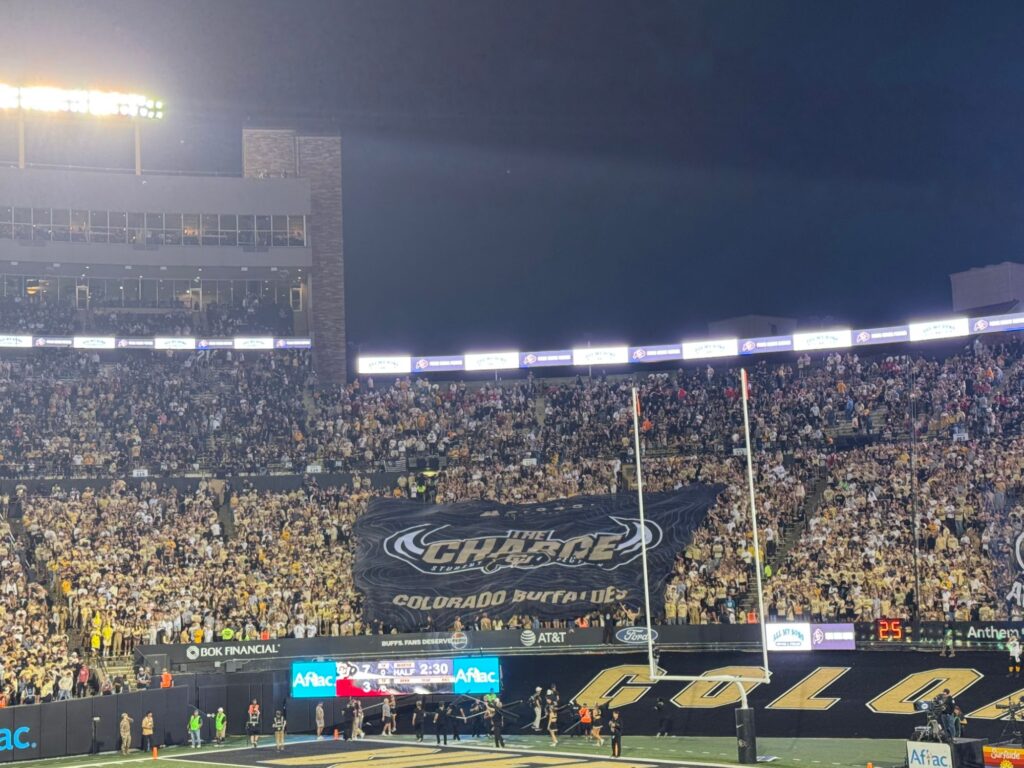
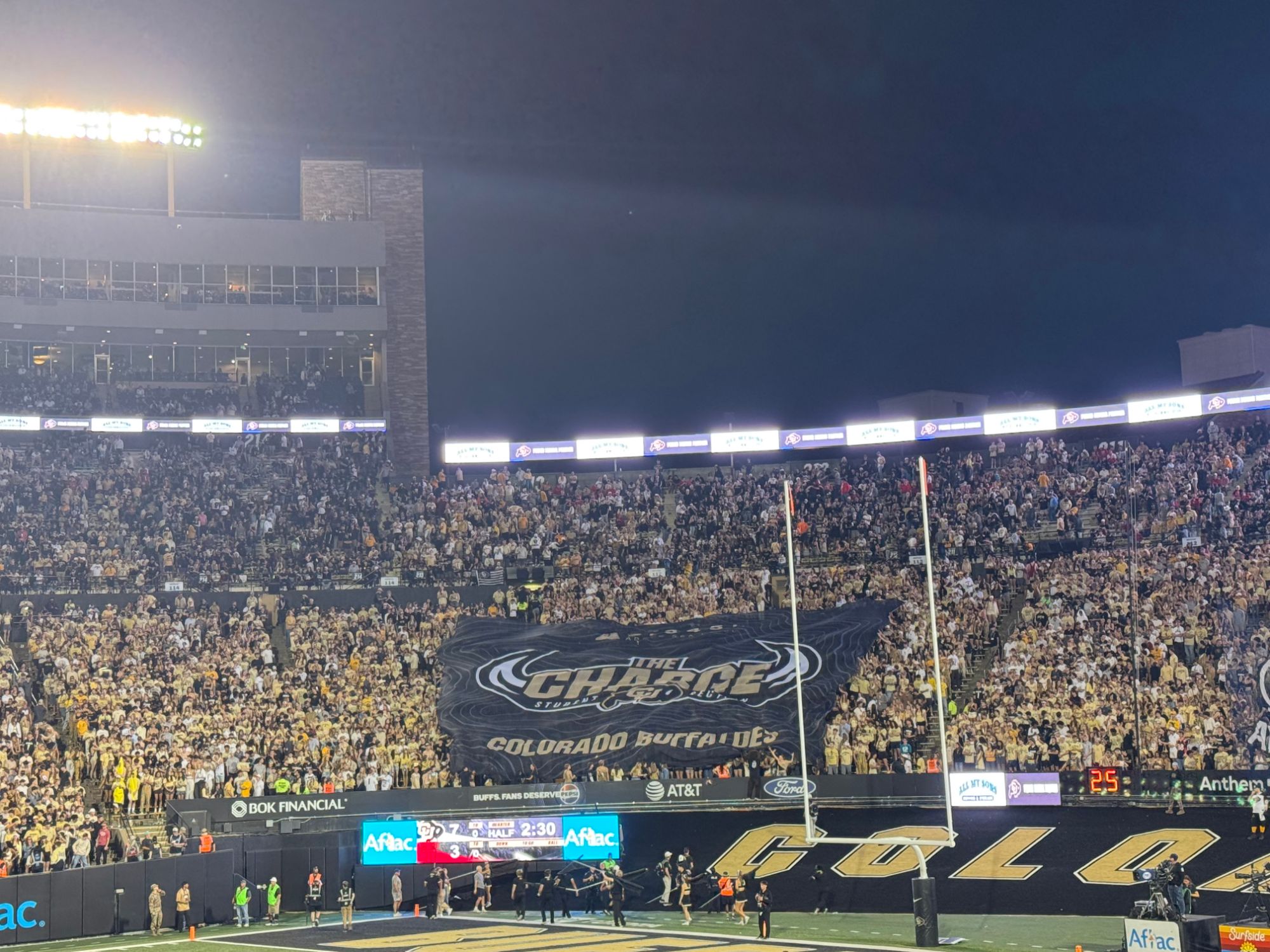
I sat in my family’s seats in Section 106 on Saturday night. At halftime, the scoreboard read Colorado 7, Texas Tech 3. The Charge had its big banner stretched over the student section. Folsom was as loud as it has been all year.
According to ESPN, it was Colorado’s first halftime lead over an FBS team in more than a year. For a little while, it felt like we might get to go home happy.
Then the bottom fell out.
Colorado never scored again. By the end of the night, the Buffs had thrown four interceptions, missed two field goals and attempted a fake punt from their own 46 that the head coach appeared to learn about at roughly the same time I did. CU lost 29-7 to a team it outgained by 60 yards.
Afterward, Deion Sanders went to the podium.
We got one glaring problem. You guys know what that is. I ain’t no fool. Let’s stop the shenanigans, man. We got to play better at one specific position. That’s it.
Deion Sanders
That’s it?
Deion Sanders has chosen to operate without a dedicated special teams coordinator. He doesn’t make in-home recruiting visits. He has filled too many coaching positions with his friends while pushing aside proven coaches like Sean Lewis. His annual roster overhauls leave CU trying to manufacture continuity every August. His team keeps piling up penalties and now leads the Big 12 in penalties. His game management keeps leaving fans wondering who, exactly, is paying attention (he was surprised that CU ran a fake punt against Texas Tech).
Now add the disciplinary problems / player dismissals and add a culture that permits a playbook to be left behind at a hotel to be found by Texas Tech fans, and you get CU’s football program. At some point, the head coach has to answer for the program he built.
And this head coach makes more than $10 million a year.
In his 18-minute press conference, Sanders said “quarterback” exactly once. He repeatedly invited the media to identify the position he clearly wanted blamed.
Fine. I’ll say it. CU’s quarterback play is bad.
But the head coaching is a bigger concern.
The quarterback doesn’t decide who coaches special teams. He doesn’t hire the assistants, establish the recruiting strategy or decide how much of the roster gets replaced every winter. Those decisions belong to the man at the podium, and they shape the situation every quarterback inherits.
But before we get too far down the “Should CU fire Deion Sanders?” path, CU fans need to understand that he isn’t going anywhere. There’s a financial reality to CU’s athletic department that makes firing Sanders cost prohibitive.
If CU fires Sanders after the 2026 season without cause, it will owe him about $26 million. If CU fires Sanders after next season without cause, it will owe him about $17.25 million. If CU fires Sanders after the 2028 season without cause, it will owe him about $9 million.
So Sanders isn’t going anywhere.
And CU fans are therefore left hoping Deion Sanders takes a long, uncomfortable look at how he runs this program. Give special teams a qualified coach with clear responsibility. Hire for expertise. Make in-person recruiting trips. Retain and develop players. Make discipline something we can see on Saturday. Stop throwing players under the bus. It is close to what I asked for a year ago after the Utah game, when I compared this program to my daughter running her brand new Crosstrek into a retaining wall and said what CU needed next was not a flashier car.
I want him to figure this out. I want to sit in Section 106, look up at a halftime lead and believe the staff can bring the game home. Saturday’s defense gave us every reason to believe that was possible. The crowd was there.
Sanders keeps asking somebody to identify the one position that needs to get better.
The head coach would be a good place to start.
Let’s jump in to five things.
1. Santana Hopper played the best game by a Colorado interior defensive lineman that I can remember
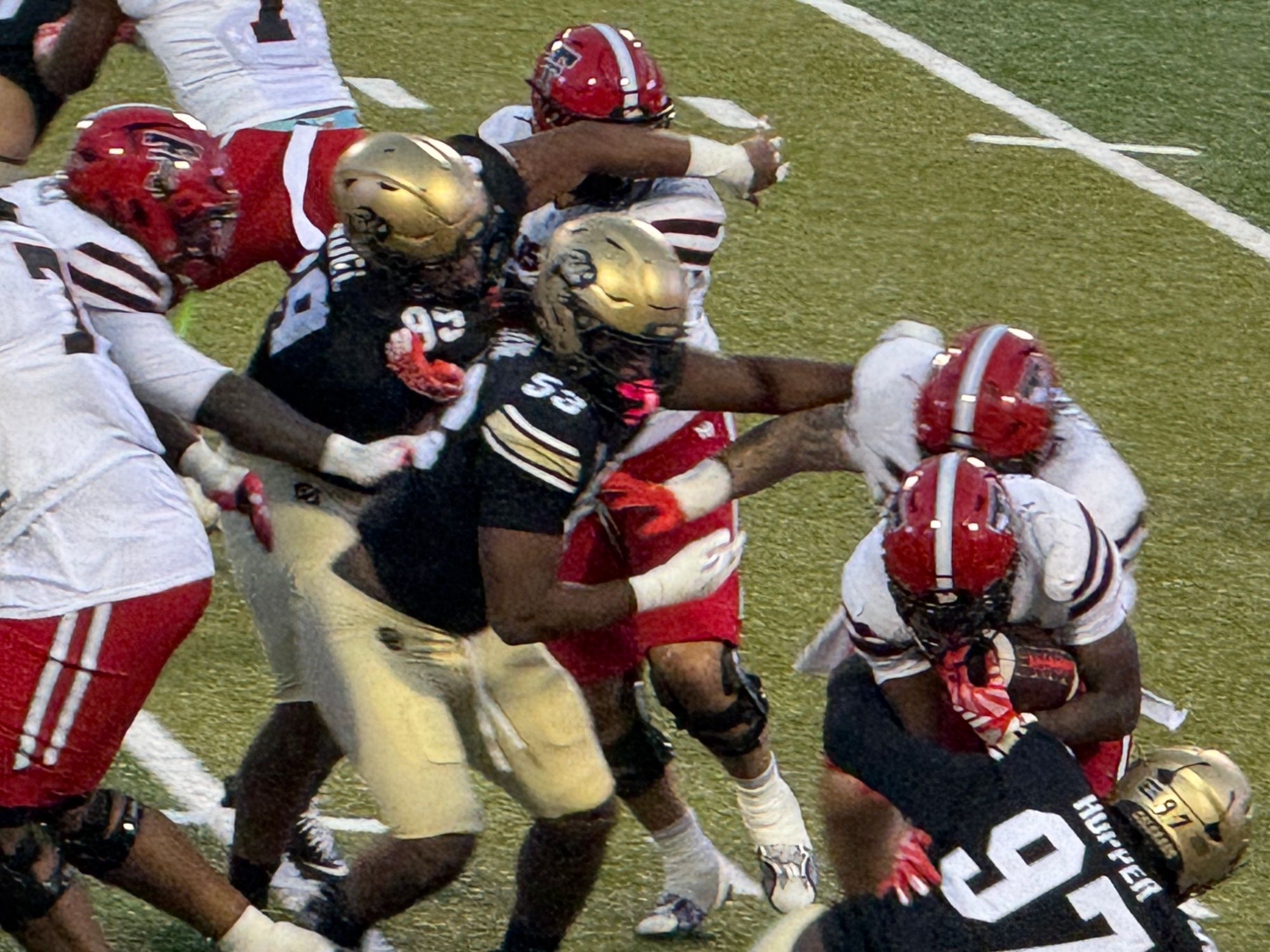
Santana Hopper was by far the best player on the field Saturday night.
Colorado’s defense recorded 22 run stops on Saturday. Hopper had nine of them. Colorado’s defense generated 12 total pressures on the night. Hopper had six. One player, on 58 of a possible 68 snaps, produced 41 percent of this defense’s run stops and half of its pressure.
| Santana Hopper vs. Texas Tech | Hopper | Rest of the CU defense |
| Snaps | 58 | (68 defensive snaps) |
| PFF overall grade | 90.4 | Next best: 73.0 (RJ Johnson) |
| Run stops | 9 | 13 |
| Total pressures | 6 | 6 |
| Tackles for loss | 5 | 6 |
| Missed tackles | 1 | 12 |
BUT (there’s always a but) — Hopper finished with zero sacks. Colorado pressured Will Hammond 12 times and got him on the ground twice. That is actually better finishing than the Buffs had been managing, but the thing I wrote about after Baylor still holds: this defensive line wins at the line of scrimmage and does not always finish the play.
If you want one reason to keep watching this team, it is Hopper. He is going to be a fantastic 5-tech (3-4 defensive tackle/end) in the NFL.
2. Colorado’s penalties tipped the game in Tech’s favor (and the refs did CU no favors).
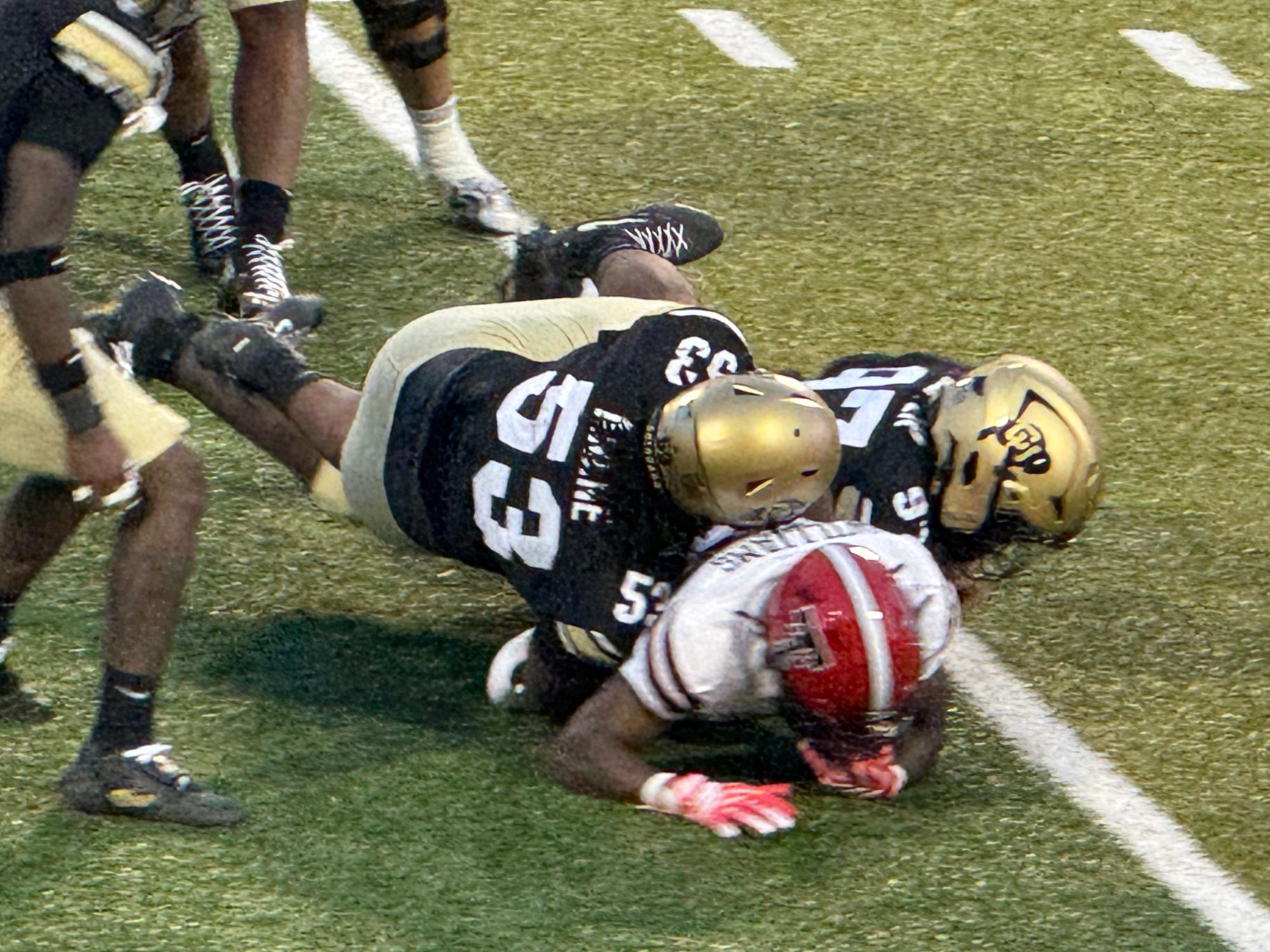
Texas Tech came into Boulder averaging 36.3 points and 429.5 yards a game. The Red Raiders finished with 315 yards, and 19 of their 29 points came off Colorado interceptions.
The defense gave CU a chance to win this game. Then the penalties helped take it away.
Look at the drive that gave Texas Tech the lead.
Colorado was up 7-6 when Tech took over at its own 21 after an Isaac Wilson interception. On third-and-3 from the 28, Will Hammond threw incomplete down the right side. CU should have been getting the ball back.
Flag. Pass interference on Randon Fontenette. Fifteen yards and a first down.
That’s the play Eric Metcalfe posted on X, and it was an atrocious call by the refs. Its effect on the game was enormous.
On the next snap, J’Koby Williams ran 35 yards to the Colorado 22. CU settled down and forced another third down, this time third-and-6 from the 18.
Another flag on Fontenette. Personal foul. Half the distance, nine yards and another first down before Tech even had to convert.
Two plays later, Terrance Carter Jr. caught an 11-yard touchdown pass. Texas Tech led for the first time all night.
A seven-play, 79-yard touchdown drive included 24 yards and two first downs supplied by Colorado penalties. The first flag erased a stop. The second erased another opportunity to get off the field.
And somehow that wasn’t even CU’s most infuriating penalty sequence.
Go back to the second quarter. Damon Greaves punted, Kenny Johnson returned it nine yards, and Tech had the ball at its own 25. Gage Goldberg’s personal foul moved it to the 40. Then RJ Johnson broke up a Hammond pass and promptly picked up an unsportsmanlike-conduct penalty.
Thirty yards in penalties. Texas Tech was at the Colorado 45 without gaining a yard on offense.
CU escaped when Tech’s kicker, Stone Harrington, missed from 51. That doesn’t make the sequence any less ridiculous.
Eight penalties for 84 yards. I wrote about this after Baylor, and I’m going to keep writing about it. When the same mistakes keep showing up on Saturdays, the coaching staff has to answer for why they’re still happening.
The frustrating part is that several of the guys making those mistakes also played really well.
RJ Johnson, Boo Carter and Cree Thomas were targeted nine times and allowed four catches for 18 yards, according to PFF. Johnson, making his first start of the season, allowed zero catches on three targets. The official stats credited him with two pass breakups. Carter allowed two catches for minus-one yard.
That’s excellent coverage.
The issue in pass defense was the linebackers.
| Texas Tech throwing at… | Targets | Catches | Yards | PFF coverage grade |
| RJ Johnson (CB) | 3 | 0 | 0 | 76.5 |
| Boo Carter (CB) | 3 | 2 | -1 | 71.1 |
| Cree Thomas (CB) | 3 | 2 | 19 | 63.2 |
| Liona Lefau (LB) | 6 | 4 | 31 | 59.3 |
| Gideon Lampron (LB) | 5 | 5 | 55 | 42.9 |
PFF charged Lefau and Lampron with allowing 86 receiving yards. For perspective, Texas Tech’s official passing total was 134. Roughly two-thirds of its passing production came against those two linebackers.
Lampron finished with 10 tackles and an 81.3 PFF run-defense grade. He allowed five catches on five targets for 55 yards, with 49 coming after the catch.
I like Lampron. He does a lot of things this defense needs. But opponents will see these numbers, and they’re going to keep looking for him in coverage until he gives them a reason to stop.
Chris Marve deserves credit for a defense that kept Colorado in this game. He also has to find ways to give his linebackers more help. When your corners allow 18 yards on nine targets, you’ve got a chance to make throwing the football awfully difficult.
CU needs to stop giving opponents an easier way down the field, whether that’s a favorable matchup or another 15 yards after the whistle.
3. Changing quarterbacks was a reasonable decision. It wasn’t a solution.
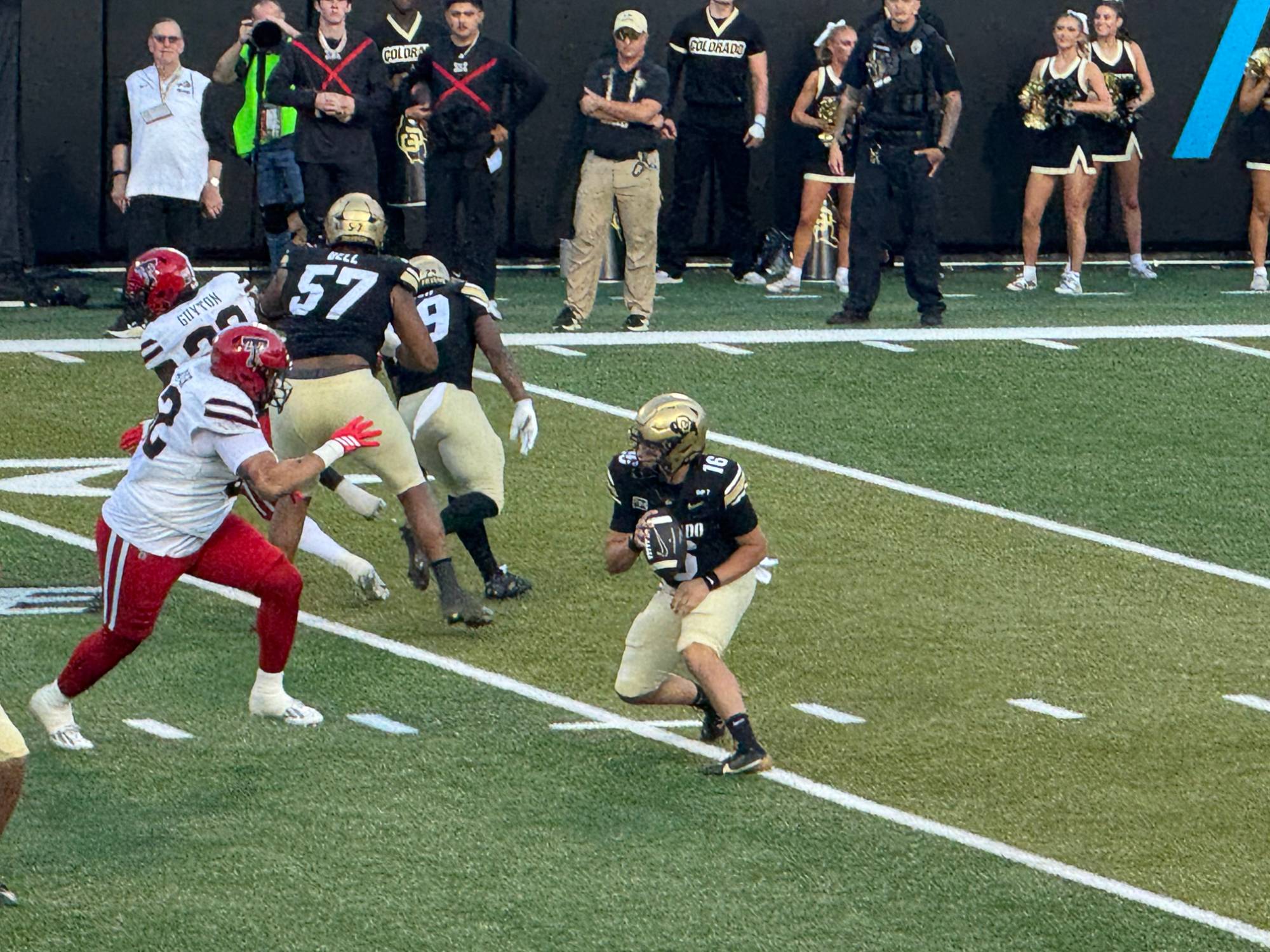
After Baylor, I wrote about Julian Lewis’s average depth of target: 2.8 yards. His average throw barely traveled beyond the line of scrimmage. He looked hesitant, and the numbers helped explain why CU’s passing game felt so cramped.
I wanted Isaac Wilson to get a shot. Against Texas Tech, he pushed the ball farther downfield, averaging 9.1 air yards per attempt. He threw for 290 yards. Joseph Williams caught 10 passes. CU finished with 375 yards, 22 first downs and a 60-yard advantage over the No. 12 team in the country.
Seven points.
Here’s the PFF comparison, remembering that Lewis played only the first half at Baylor:
| PFF measure | Lewis at Baylor, first half | Wilson vs. Texas Tech |
| Average depth of target | 2.8 yards | 9.1 yards |
| Big-time throws | 0 | 0 |
| Turnover-worthy plays | 2 | 5 |
| Pressures faced | 6 | 17 |
| Sacks taken | 3 | 1 |
| Average time to throw | 2.58 seconds | 3.16 seconds |
Wilson did something Lewis struggled to do: keep pressure from becoming a sack. Lewis went down on three of six pressures at Baylor. Wilson took one sack on 17 pressures Saturday.
That’s a real improvement. Unfortunately, keeping the play alive only helps if you make a good decision afterward.
Wilson threw three interceptions. PFF charged him with five turnover-worthy plays and credited him with zero big-time throws. CU got the more aggressive quarterback many of us wanted, along with more risk than this offense could afford.
His average time to throw was 3.16 seconds. He was giving plays time to develop, escaping pressure and looking for something downfield. Too often, the extra time ended with a bad decision.
John Curry described the pick-six about as painfully as possible:
“The QB was holding the ball and staring right at me. I jumped up and he just threw it right to me.”
Wilson’s explanation afterward was refreshingly honest.
“I need to stop trying to be more than I am. We’ve got dogs all over the field and I just need to get it to them.”
He’s right. And helping him do that is Brennan Marion’s job.
Lewis was getting rid of the ball quickly, throwing short and still taking sacks. Wilson held it longer, threw farther downfield and turned it over. Neither has played well enough. Changing quarterbacks was a reasonable decision, and Saturday showed how much work remains after you make it.
CU needs better quarterback play. Marion also has to put together an offense that one of these quarterbacks can actually run. He’s had the offseason and five games to figure out what they do well.
Seven points is a pretty clear indication he hasn’t figured it out yet.
4. Brennan Marion’s offense is averaging 10.25 points per game against FBS teams, and the formations are part of why
Brian Howell published the number on Saturday night that should end the argument about whether this is purely a quarterback problem.
| Points per game by play caller under Deion Sanders | Games | PPG |
| Sean Lewis | 8 | 32.1 |
| Pat Shurmur | 25 | 27.6 |
| Brennan Marion | 5 | 18.6 |
| Brett Bartolone | 4 | 17.5 |
Marion’s 18.6 includes 52 points against Weber State, an FCS team that is giving up 37.5 points per game. Strip that out and Colorado has played four FBS opponents this season and scored 14, 7, 13 and 7. That is 41 points in four games. Ten and a quarter per game.
Now the part I noticed from Section 106 and have not been able to unsee.
Marion loves to line everybody up on the short side of the field. Backs, tight ends, receivers, all of it condensed into the boundary. That is a signature of the Go-Go offense and the theory behind it is sound enough. Squeeze the defense into a small space, create leverage in tight spaces, then attack the wide side of the field with crossing patterns.
What it looked like in person is a team playing football in about 25 yards of width. Every so often the Buffs would try to sneak a receiver across to the open grass on the field side. He almost never got there in time.
You can absolutely run a condensed offense. Plenty of good teams do. But a condensed offense playing in tight space needs tight ends who can drag to the wide side of the field. Colorado’s tight ends have now played 338 snaps across three games and caught four passes.
And take Joseph Williams out of the receiving numbers for a second. Colorado’s other wide receivers ran 106 routes on Saturday and produced 109 yards.
That is the phone booth.
5. Special teams is the reason this team’s margin for error is zero
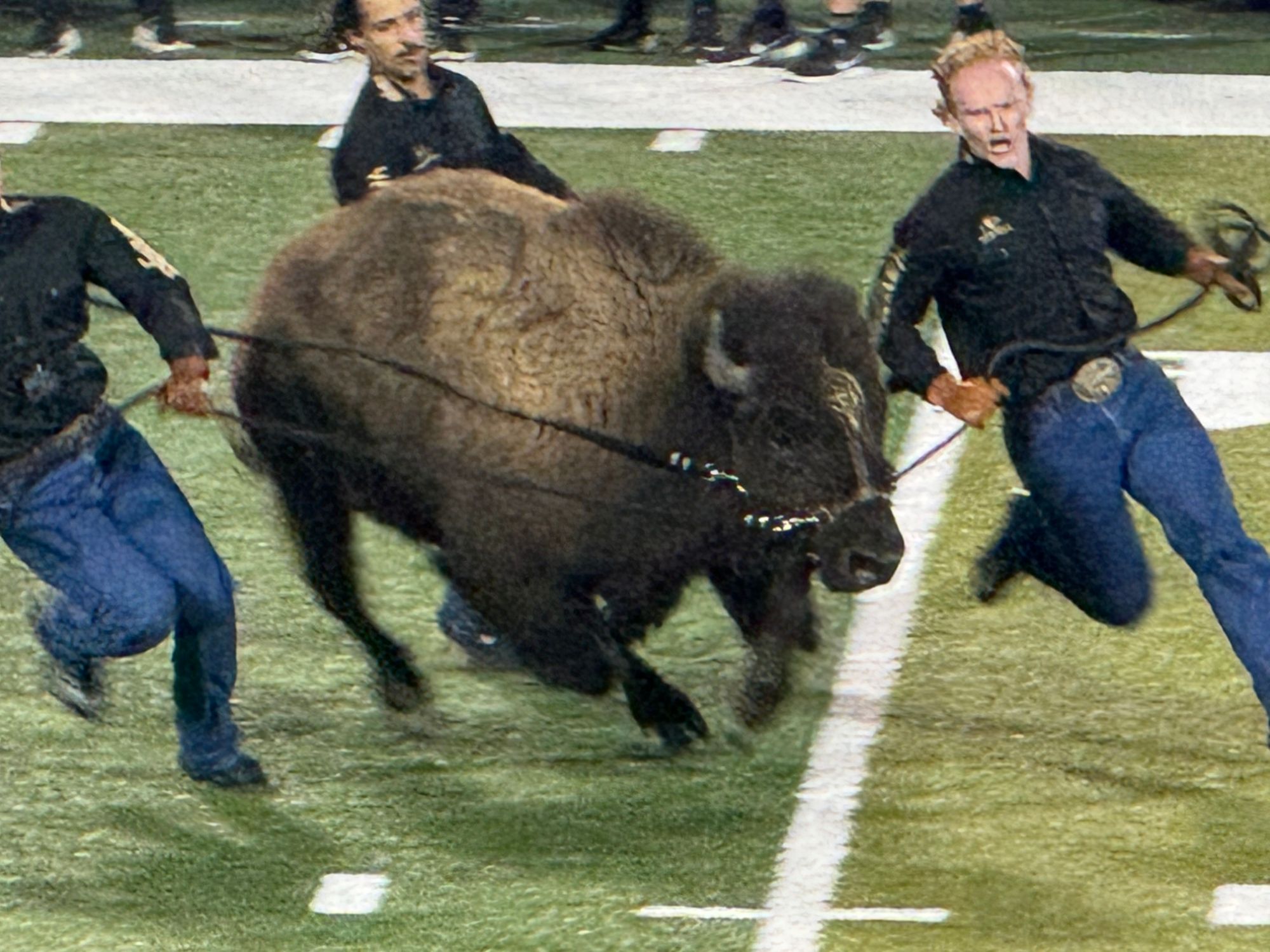
I have written about the special teams after each of the last two games and I am starting to feel like a crank about it, so let me just put Saturday on a list and let you decide.
- Elliott Arnold missed a 29-yard field goal in the first quarter with Colorado leading 7-3. PFF graded his field goal kicking at 49.5.
- Arnold missed again from 52 on the last play of the first half.
- Colorado ran a fake punt on fourth and seven from its own 46 in a 7-3 game. Naeten Mitchell got four yards. Texas Tech took over at midfield. Per the ESPN recap, the call appeared to catch Deion Sanders by surprise.
- DNVR reported that Colorado burned a timeout because only eight players came out for a field goal block, then came back out of the timeout with nine.
- Texas Tech punted three times and Colorado returned none of them. Average Colorado starting field position after a Texas Tech punt: its own 19.
That last one almost killed me.
With 7:16 left in the fourth quarter and Colorado trailing 15-7, Will Karoll punted 66 yards. Boo Carter let it go. Colorado took over at its own 2.
Six seconds of game clock later, it was 22-7.
One snap. Wilson tried to float it to Fisher Clements in the end zone, Curry read it the whole way, and the game was over.
You can argue about whether Carter should have fielded that punt. One fan put it bluntly on X: how is he supposed to know whether to catch it when there is nobody on staff whose job it is to tell him? Colorado is still the only team in the Big 12 without a special teams coordinator. At some point that stops being a quirk and becomes the explanation.
Karoll averaged 55.7 yards on three punts with two inside the 20. Damon Greaves averaged 45.7. Texas Tech’s punter was one of Tech’s best players Saturday night.
So what do they do at quarterback?
Sanders says there are three options. “Somebody just got to step up and take a hold of it and get it done.”
I do not think there is a good answer, and I said the same thing after Baylor. But you asked, so here is mine.
Start Isaac Wilson against Utah, assuming he is healthy. He went down late Saturday and Kaneal Sweetwyne took the final snap. Throwing it 9.1 yards on average downfield while making bad decisions is hopefully correctable. Throwing it 2.8 yards downfield because you are afraid of what happens next is not something you fix in a bye week.
There are some nasty rumors on social media that Juju Lewis has essentially left the football team after he was benched last week. No sources have told me that this is true, and right now I chalk it up to a dumb rumor. However, CU’s quarterback room is precariously thin (only 3 scholarship quarterbacks on the roster in Wilson, Sweetwyne and Lewis) and with Lewis’ injury at the end of the 4th quarter, CU may need to run an open tryout to find students that played high school quarterback.
And if the answer coming out of the bye is Sweetwyne, then Deion Sanders should give the kid two full weeks of first-team reps. Splitting reps three ways and expecting a freshman quarterback to excel with limited practice snaps doesn’t doesn’t give him enough time to develop.
Where this leaves us
Colorado is 2-3 and 0-2 in the Big 12 with Utah, Oklahoma State, Kansas State, Arizona State, Houston, Cincinnati and UCF still on the schedule. Four of those teams are ranked right now. Bowl eligibility is still mathematically possible and requires Colorado to start beating teams it is not currently beating.
What I keep coming back to is that Saturday was a genuinely good night in every phase that is not about play calling, discipline or kicking. Chris Marve’s shorthanded defense held the 12th-ranked team in the country to 315 yards and three points on the drives it had to earn. Santana Hopper played like a pro. RJ Johnson, who was not starting a week ago, did not allow a catch.
And they lost by 22.
Sanders said the score is not indicative of who these guys are. He is right about that, and I think most of Folsom would agree with him. The players are better than 29-7. The problem lives in the lack of offensive identity, the discipline, and the special teams.
Every one of those is coaching. And two weeks is not very long.
How to Watch CU Athletics This Week, Sponsored by SportsDeck
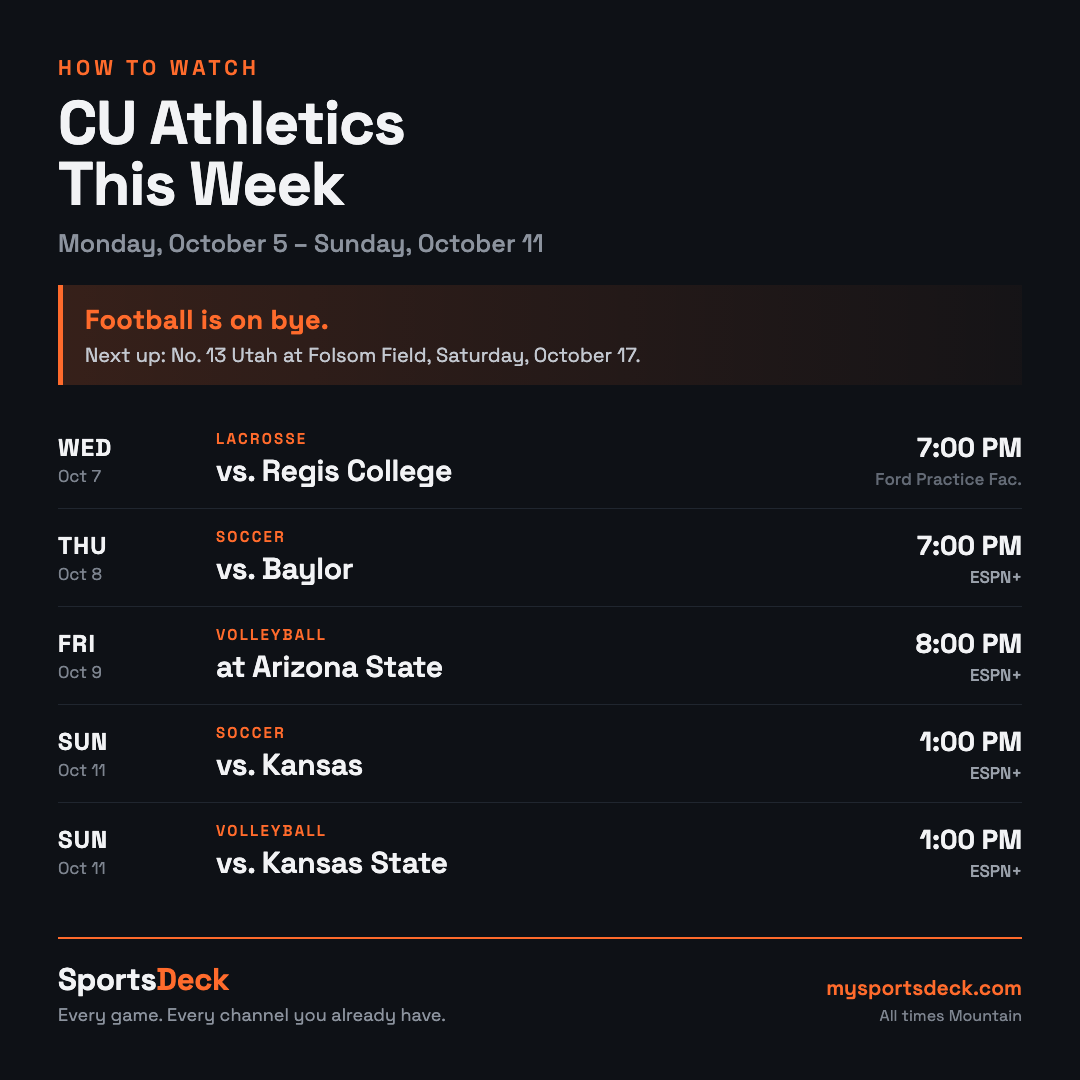
Football is on bye. The Buffs return on Saturday, October 17 against No. 13 Utah at Folsom Field. Kickoff time and network have not been announced yet, which usually means a 10 or 11 day window before it gets set. I will have it here once it does.
In the meantime, there is actually a good week of CU sports to watch, and almost all of it is on one service.
Soccer: Colorado vs. Baylor, then vs. Kansas
Thursday, 7 p.m. MT on ESPN+
Sunday, 1 p.m. MT on ESPN+
Both at Prentup Field in Boulder, both streaming on ESPN+, which is the standalone streaming service and not the ESPN cable channel. Tickets to Prentup are cheap and the soccer program has been the most consistently good thing at CU for several years running. The Leyba sisters are worth watching.
Volleyball: at Arizona State, then vs. Kansas State
Friday, 8 p.m. MT at Arizona State — ESPN+
Sunday, 1 p.m. MT vs. Kansas State — ESPN+
The Sunday match is at the CU Events Center. Note that it goes head to head with the soccer match across town, so pick your spot or set up two screens.
Also this week
- Lacrosse: vs. Regis College, Ford Practice Facility, Wednesday at 7 p.m.
- Cross country: Nuttycombe Invitational, Madison, Wisconsin, Friday
Neither is televised. Live stats and results go up on CUBuffs.com.
This section is sponsored by SportsDeck, an app I built after getting tired of finding out my team had played yesterday, on a channel I already had.
Here’s how it works:
You tell it which teams you follow (there are 3,220 teams on SportsDeck across 47 sports leagues) and which streaming and TV services you already pay for. SportsDeck tells you every game your teams play, what time it starts, what channel or app it’s on, and whether you can actually watch it with what you’ve got. It can even show you whether there’s a cheaper way to watch more of your teams’ games.
Then it does the part I’m proudest of: it brings together your teams’ news, podcasts, YouTube videos, and trusted local coverage in one place—like the old sports page you miss, rebuilt for today’s world. SportsDeck has 454 of these pages, and I built and curate the whole operation.
You can also get a morning email with your games, viewing information, and biggest team stories before your coffee. There are game alerts and an iPhone widget, too.
Your first month of Pro is free. Get the iPhone app or start at mysportsdeck.com.
OTITWI (Other Things I Thought Were Interesting)
–This is an extraordinary peice — a story on WSJ’s Evan Gershkovich’s 491 days as Putin’s political prisoner. https://www.thetimes.com/magazines/the-sunday-times-magazine/article/evan-gershkovich-prison-diary-g6g6nx8vd?src=longreads&utm_medium=email&utm_campaign=Newspack%20Newsletter%20%28260130%29&utm_source=bd2ad42066&utm_source=Longreads+Newsletters&utm_campaign=f66b5cee23-EMAIL_CAMPAIGN_2026_09_28_04_56&utm_medium=email&utm_term=0_-f66b5cee23-242154547&mc_cid=f66b5cee23&mc_eid=1d7ab80
–I’ve started following MIT professor and Nobel Prize winning economist Daron Acemoglu on X. He has been doing a series of answering 5 questions about AI, and it’s been facinating. Here’s one of his answers. https://x.com/DAcemogluMIT/status/2106133404806676644
–Checking in with the CU men’s basketball team. https://www.youtube.com/watch?v=qWVPT6xeIE0
–Harlem Globetrotters’ 1956 promotional reel. https://www.youtube.com/watch?v=SISC186P0QA&t=303s
$26m for CU is too much.
Damn.
We’re stuck.
Nice reporting. You’re the best CU has.
Thanks Dave. I think you’re right – CU can’t fire Sanders.
One other thing — if Sanders gets fired and takes a TV job, his TV broadcast salary probably doesn’t reduce the buyout owed by CU to Sanders.
Section 13(b) of Sanders’s 2025 contract provides an offset for income from “comparable professional employment.” Examples include college or professional coaching, scouting, and executive positions in the professional sports industry. Broadcasting and television analyst work are not expressly listed.
I suspect the lawyers could argue over whether TV work is comparable professional employmnt.
You can read his contract at: https://cu.community.diligentoneplatform.com/document/f62f1797-c88f-4707-bf61-73fa39f1059a/
Hopper was fantastic. I told my brother that he made every defensive play. Based on your stats, it looks like that was practically true. I can’t believe how a 270 pound tackle can be as good as he is.
Why can’t the university just cut CU a $25m check and be done with Sanders? He’s a sunk cost, enrollment is down, and CU needs a football program that can be the front porch of the university.
CU’s FY2025 report shows $161.7 million in revenue, including $24.5 million in direct university support and $17.3 million in indirect support. CU subsequently announced a projected $27 million deficit for FY2026.
Thus, the university is going to need to provide the AD over $50m in university support this year. You think we can add another $26m on top of that? I think the academic folks would have a heart attack.
Plus, we have to drop additional $$$$$$$$ for the new staff. Crappy situation.
Yep – it’d be a massive expense.
Great read, thank you! We need consistency (duh!), but Sanders tries to reinvent us each season, not just with players, but coaches, schemes and it creates a huge gap. Great coaches have a system, or belief, and add coaches, quarterbacks, special talent that help evolve, augment, enhance the original vision or system. We have none of that. And we need to get the fundamentals right! not enough men on the field?? Unacceptable. Get the basics right, most of us learned that in Pop Warner, high school football.
I agree that CU won’t be firing Sanders, he’ll either find a media role that is ‘too good to turn down’ as his way of exiting, so the new AD can then make his signature hire. Or we will painfully allow Sanders to stay on, burn down his contract commitment, and struggle to make 6-6 with new QBs, new schemes, and no consistency.
The lack of player continuity issue gets talked about a lot (I’m guilty), but the lack of coaching continuity that you bring up is just as important. CU’s had 4 different offensive coordinators under Sanders (Lewis, Shurmur, Bartalone and now Marion) and at this point CU has no scheme identity.
So much truth in that. Different era, but Coach MAC turned CU around in 4-5 seasons. The one constant, is after a few early changes at OC/DC, his coaches then stayed for long tenures. Tepper was 5 years, then he promoted Hank who stayed until MAC retired. DiNardo was like 7 seasons and leaving to take Vandy job. Barnett took over but was AC since 84′. It is continuity and promoting from within.
MAC built trust and loyalty in his staff with qualified coaches. Prime is just change after change–this has to impact recruiting and portaling. It probably takes 1/2 or more of the pre-season just for coaches to know one another; then they play their 1st game together.
Better chances: Deion steps down on his own accord.