[Editor’s note: Another one from BuffsBlog basketball editor Chris Gaddis, who also wrote this week’s optimist case on the men’s team. He is undefeated at talking himself into Colorado basketball teams in October. Welcome him in the comments.]
JR Payne’s Buffaloes won 22 games, beat four ranked opponents, and overcame one of the worst three-point shooting performances in the Big 12. Now imagine what happens if they learn to shoot.
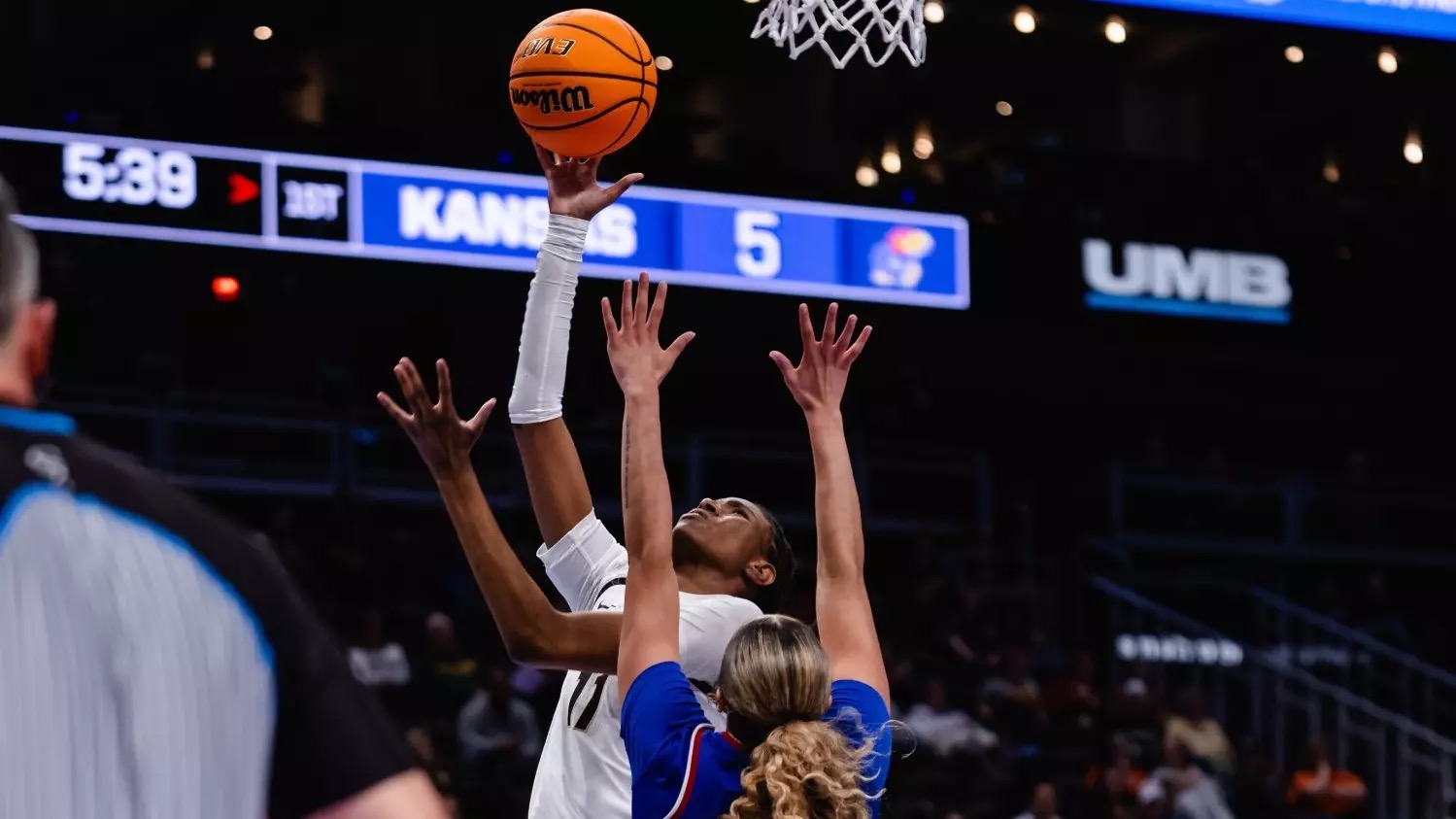
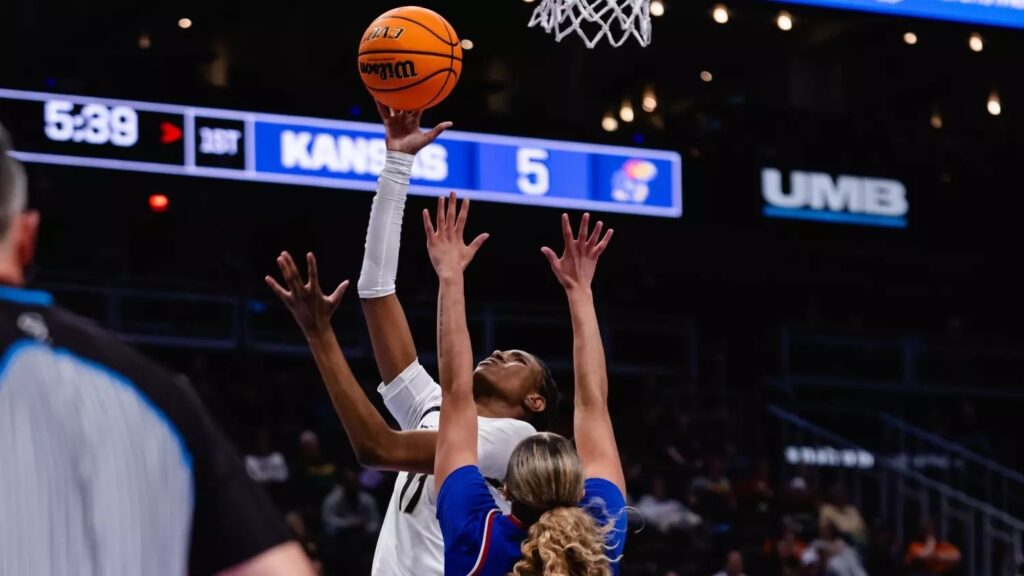
There are certain statistical achievements in college basketball that defy reasonable explanation. Winning 22 games while shooting 27.3% from three-point range is pretty high on that list. Beating four ranked opponents while being outscored by 174 points from beyond the arc might be even more impressive. And doing all of that while playing the nation’s 41st-toughest schedule? Well, that suggests JR Payne might know something about coaching basketball.
But here’s where things get interesting. What if Colorado’s biggest weakness last season wasn’t evidence of a limited team, but evidence of just how good this program could become?
Payne has spent the offseason assembling a roster that appears specifically designed to address the one thing her teams haven’t consistently done: shoot. And if she’s right about the shooting talent she’s assembled, the implications could be considerably more interesting than another 20-win season and an NCAA Tournament appearance.
I’m talking about a legitimate run in March. Maybe even the second weekend. Perhaps something even more interesting.
Yes, I recognize how ridiculous that might sound for a team picked eighth in its own conference. I also recognize that I’m Buffsblog’s resident optimist, which means my annual preseason enthusiasm should probably be classified as a recurring medical condition. But after digging into the numbers, examining the returning talent, and looking at what Payne has assembled, I’m beginning to think the Buffs might have considerably more upside than the experts are giving them credit for.
Because when you can defend, rebound, and beat ranked opponents without making threes, the prospect of actually making a few should terrify the rest of the Big 12.
Here are ten reasons I believe Colorado will be dancing in March and why the Buffs might be capable of doing considerably more than showing up.
No. 10: The Buffs Were Already Better Than Their Record Suggested
Let’s begin with what Colorado accomplished last season, because the underlying numbers tell a more interesting story than the 22-12 record.
The Buffs finished fourth in the Big 12 at 11-7, played the nation’s 41st-toughest schedule, and finished 40th nationally in Sports-Reference’s Simple Rating System, which accounts for opponent quality and scoring margin. They beat four ranked opponents, advanced to the Big 12 Tournament semifinals, and earned another NCAA Tournament invitation. And they accomplished all of that with an offense that ranked 146th nationally in scoring at just 67.5 points per game.
The Buffs were, however, exceptionally good at making sure their opponents weren’t particularly high scoring either. They held opponents to 39.6% from the field, averaged 9.3 steals per game, and outrebounded opponents by 6.7 per contest. They created additional possessions, defended relentlessly, and generally turned basketball games into the sort of unpleasant experiences that make opposing coaches reconsider their career choices.
That formula was good enough to beat No. 19 Iowa State 68-62, No. 14 TCU 80-79, No. 20 Texas Tech 75-68, and No. 20 Baylor 62-53. Those weren’t victories over inferior competition. Colorado demonstrated repeatedly that it could compete with some of the better teams in the country.
The problem wasn’t Colorado’s ability to compete with good teams. It was sustaining enough offense to finish the job. The Buffs scored just 47 points in their one-point Big 12 semifinal loss to West Virginia and managed only 57 in their NCAA Tournament loss to Illinois.
The encouraging part? Colorado doesn’t necessarily have to become dramatically better at everything. It just needs to improve in a few specific areas to become a much more dangerous postseason opponent.
No. 9: Fixing the 174-Point Problem Could Change Everything
Here’s the statistic that convinced me Colorado’s ceiling might be substantially higher than its preseason expectations.
The Buffs made 137 three-pointers last season. Their opponents made 195. That’s a difference of 58 three-pointers, or 174 points over 34 games. Put another way, Colorado was outscored by an average of 5.1 points per game from beyond the arc. In modern college basketball, that’s an awfully difficult handicap to overcome. Yet Colorado still won 22 games and finished fourth in the Big 12.
Here’s where the math becomes interesting. The Buffs attempted approximately 502 three-pointers last season, connecting on just 27.3%. Had they shot a respectable 35% on the same number of attempts, they would have made approximately 39 additional threes, producing roughly 116 more points over the season. That’s 3.4 additional points per game at 35% without attempting a single additional shot.
Now, obviously, basketball isn’t played on a spreadsheet, although I suspect there are a few analytics departments around the country that would prefer otherwise. Improving shooting percentages doesn’t automatically translate into additional victories. But consider what even a modest improvement could mean for a team that lost a Big 12 semifinal by one point.
And those calculations don’t account for the indirect benefits of better perimeter shooting: improved spacing, fewer defenders collapsing into the paint, more driving lanes, and better opportunities for interior players.
Colorado doesn’t have to become the best shooting team in the country. It just needs to stop being one of the worst.
No. 8: Lauren Harris Might Be the Most Intriguing Freshman in the Big 12
Now here’s where Payne believes she’s addressed the problem. The Colorado coach has suggested that this 2026-27 squad may be the best shooting team of her Colorado tenure. That’s a significant statement, and no newcomer illustrates the potential quite like freshman Lauren Harris.
Harris arrives from Yuba City, California, with high school shooting statistics that read like somebody accidentally entered video-game numbers into a basketball resume. Harris reportedly made seven three-pointers per game as a senior, finishing her high school career with 742. She also averaged 13.7 rebounds and 5.8 assists while leading Faith Christian to a California state championship. Her three-point totals were reported as national high school records.
Of course, the Big 12 is not high school basketball. The defenders are bigger, faster, and considerably less interested in allowing Harris to shoot uncontested threes. But Colorado doesn’t need her to replicate those numbers. It needs opponents to respect the possibility that somebody wearing a Buffaloes uniform might actually make an outside shot.
And that possibility alone changes how teams have to defend Colorado.
No. 7: Logyn Greer Could Become a Legitimate Big 12 Star
Every team that makes a deep NCAA Tournament run seems to have at least one player who elevates her game when the stakes get higher. For Colorado, that player might be 6-foot-4 sophomore Logyn Greer.
Greer averaged 9.2 points and 5.0 rebounds last season, shot 44.5% from the field, and earned All-Big 12 Freshman Team recognition. She appeared in all 34 games, started 17, collected 169 rebounds, and blocked 27 shots. Those are impressive numbers for a freshman playing approximately 23.4 minutes per game.
But they become considerably more interesting when adjusted for playing time. On a per-40-minute basis, Greer’s production translates to approximately 15.7 points and 8.5 rebounds. That doesn’t mean she will automatically produce those numbers with additional minutes, but it illustrates the kind of statistical upside that exists if she becomes a more central part of Colorado’s offense.
And then there’s Payne’s assessment of her talent. The Colorado coach recently described Greer as one of the most talented players ever to come through the program. Think about that for a moment. We’re talking about a program that produced remarkable players during the Ceal Barry era, including Shelley Sheetz and Lisa Van Goor, and more recently Jaylyn Sherrod and Aaronette Vonleh.
Greer’s shooting numbers also suggest an interesting developmental opportunity. She connected on just 25.9% of her three-point attempts but shot 78.1% from the free-throw line. Free-throw accuracy doesn’t guarantee future perimeter success, but it provides at least some evidence of shooting touch that could develop with experience.
If Greer improves her perimeter game while becoming more assertive offensively, Colorado could have a matchup problem that few Big 12 teams are equipped to handle. A 6-foot-4 forward who can rebound, defend, score inside, and stretch the floor would be an enormously valuable piece in Payne’s system.
Colorado doesn’t need Greer to become an All-American overnight. But if she takes the kind of sophomore leap her freshman production suggests is possible, the Buffs could have the emerging star capable of changing a postseason game.
No. 6: Colorado Might Have One of the Big 12’s Most Interesting Frontcourts
While much of the attention surrounding Colorado’s newcomers has focused on perimeter shooting, I’m particularly intrigued by Kira Reynolds, the 6-foot-2 transfer from UT Arlington.
As a freshman, Reynolds averaged 13.0 points, 7.9 rebounds, and 2.4 blocked shots per game. Over 33 games, she accumulated 430 points, 260 rebounds, and 78 blocks, leading her team in all three categories and earning All-WAC Freshman Team recognition.
Consider the shot-blocking production. Reynolds averaged approximately 2.36 blocks per game, compared with Greer’s 0.79. Together, the two players recorded 105 blocks last season at their respective schools.
And Reynolds isn’t the only significant addition. Boston University transfer Anete Adler, a 6-foot-5 graduate center, averaged 15.4 points, 6.0 rebounds, and 2.0 blocks per contest. Add 6-foot-4 sophomores Jade Crook and Sophie Zadel, and Colorado suddenly has a collection of size, length, and defensive versatility that could create matchup problems throughout the conference.
The challenge, of course, is replacing Anaelle Dutat, who averaged 8.6 points and 8.0 rebounds last season. Her departure leaves a substantial hole in Colorado’s rebounding production, and assuming the newcomers will immediately replicate their numbers against Big 12 competition would be overly optimistic.
But here’s what makes this group interesting. Colorado outrebounded opponents by 6.7 per game last season, creating additional possessions and limiting second-chance opportunities. With Greer developing and Reynolds and Adler joining the rotation, the Buffs have a legitimate opportunity to maintain that advantage while becoming more dangerous offensively.
And in March, rebounding travels. Shooting percentages fluctuate. Opponents change. But teams that defend the rim, control the glass, and generate additional possessions are difficult to eliminate.
No. 5: Zyanna Walker Gives Colorado the Leader Every Tournament Team Needs
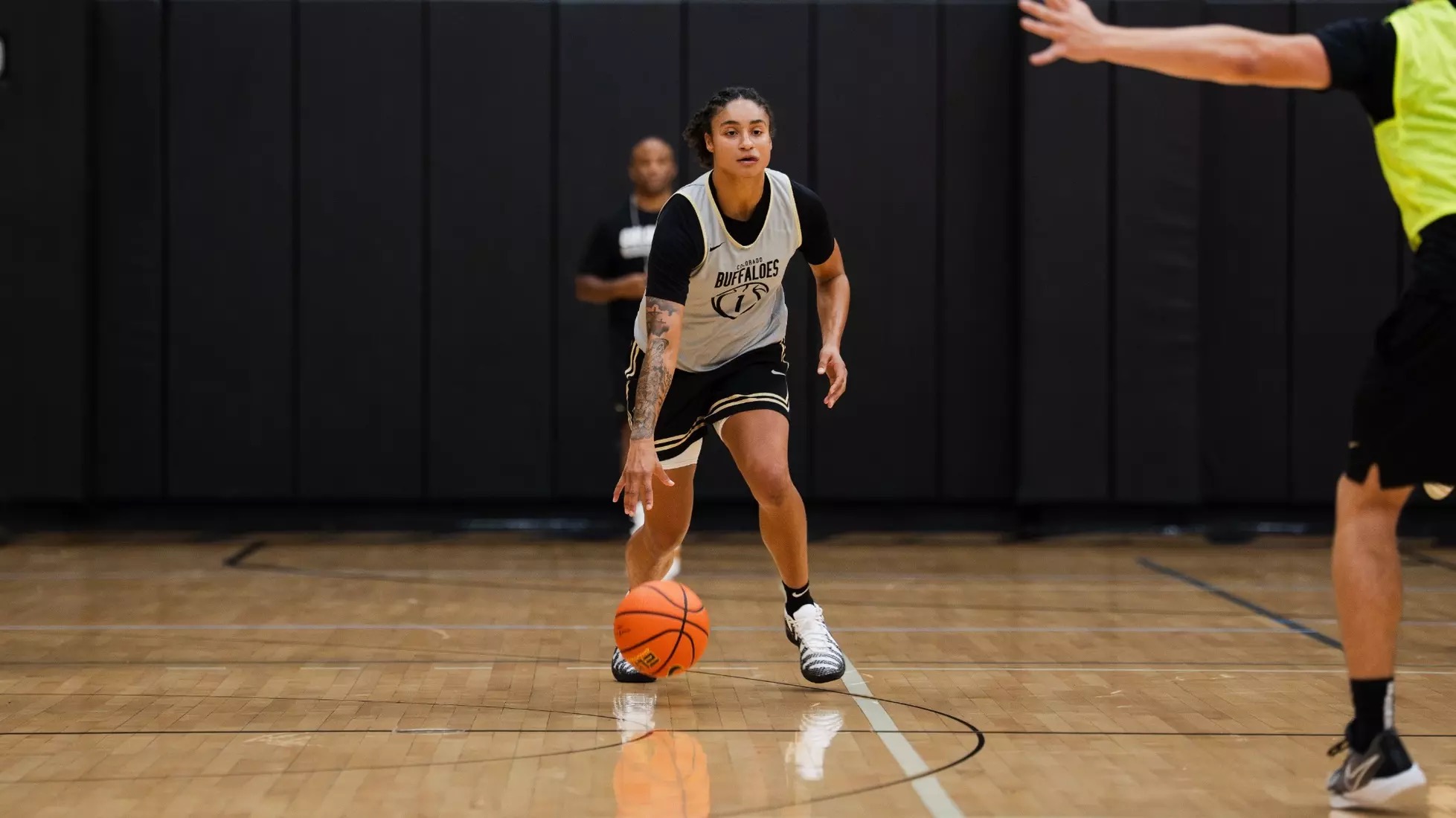
Zyanna Walker is the obvious centerpiece of Colorado’s backcourt, and for good reason.
She averaged 11.3 points, 4.2 rebounds, 2.3 assists, and approximately 2.1 steals last season. Her 70 steals ranked third in the Big 12, she earned All-Big 12 Defensive Team recognition, and she enters the season with preseason All-Big 12 honors.
Walker is the kind of player every successful postseason team needs. She disrupts possessions, creates transition opportunities, defends multiple positions, and generally makes life miserable for opposing guards. She also elevated her offensive production during the Big 12 Tournament, scoring 41 points in three games. But her importance extends beyond the box score.
Colorado is incorporating seven newcomers, several of whom will be asked to play substantial minutes immediately. Establishing chemistry, defensive communication, and accountability could be the difference between a talented roster and a successful team. Walker already understands what Payne expects, and her ability to set the tone defensively gives Colorado an important foundation.
The Buffs aren’t asking a newcomer to establish their identity. They’re asking newcomers to join a program with an established identity, led by a player who embodies it.
That’s a meaningful advantage.
No. 4: The Backcourt Has More Scoring Options Than It Did a Year Ago
One of Colorado’s biggest challenges last season was its inability to consistently generate offense when opponents took away its primary scoring options. The Buffs averaged just 67.5 points per game, and their offensive limitations became particularly apparent in postseason losses to West Virginia and Illinois.
That could change with the additions of Tulane transfer Mecailin Marshall, Kansas State transfer Aniya’ Foy, and Utah transfer Brooke Walker, along with the return of Kennedy Sanders and Maeve McErlane.
Marshall is particularly intriguing. She averaged 10.5 points and 3.8 rebounds in 31 games last season, earned American Conference Freshman of the Year honors, and demonstrated her scoring potential with a 34-point performance against East Carolina. That’s important because Colorado must replace leading scorer Desiree Wooten, who averaged 13.4 points per game.
Sanders, meanwhile, returns after an injury-shortened season in which she averaged 9.3 points, 2.2 assists, and 1.9 steals over 10 games. She shot 43.1% from the field and 32.1% from three, nearly five percentage points better than Colorado’s team average. A healthy Sanders could provide another credible shooting threat while reinforcing the defensive pressure that defines Payne’s teams.
Foy averaged 4.3 points in approximately 13 minutes per game at Kansas State, providing valuable Big 12 experience. Brooke Walker contributed 5.1 points, 3.2 rebounds, and 2.1 assists at Utah, suggesting she can help as a complementary playmaker. McErlane provides continuity and experience.
Individually, none of these additions guarantees a dramatically improved offense. Collectively, however, they give Payne something she didn’t consistently have last season: options.
And options matter in March, when opponents have time to prepare, identify weaknesses, and force teams away from their preferred offensive sets.
No. 3: Better Ball Security Could Be Worth Almost as Much as Better Shooting
For all the attention Colorado’s perimeter shooting deserves, there’s another offensive statistic that might be nearly as important.
The Buffs recorded 460 assists against 558 turnovers last season, an assist-to-turnover ratio of just 0.82, ranking 13th in the 16-team Big 12. They averaged 16.4 turnovers per game.
That’s a significant problem for a team that already struggles to score consistently.
But it’s also a significant opportunity.
Consider what happens if Colorado reduces its turnovers by just two per game. Over a 34-game season, that’s 68 additional possessions in which the Buffs have an opportunity to generate a shot rather than give the ball away. Not all those possessions become points, of course, but even modest improvement could have a meaningful impact on offensive efficiency.
And the potential benefits go beyond scoring. Fewer live-ball turnovers mean fewer transition opportunities for opponents, allowing Colorado to set its half-court defense, the part of the game where Payne’s teams are particularly effective.
With Walker, Sanders, McErlane, and several experienced transfers in the backcourt, Colorado has the personnel to improve its decision-making and ball movement.
Sometimes the easiest way to score more points isn’t to shoot more often. It’s to stop giving the ball to the other team.
No. 2: JR Payne is a DAWG.
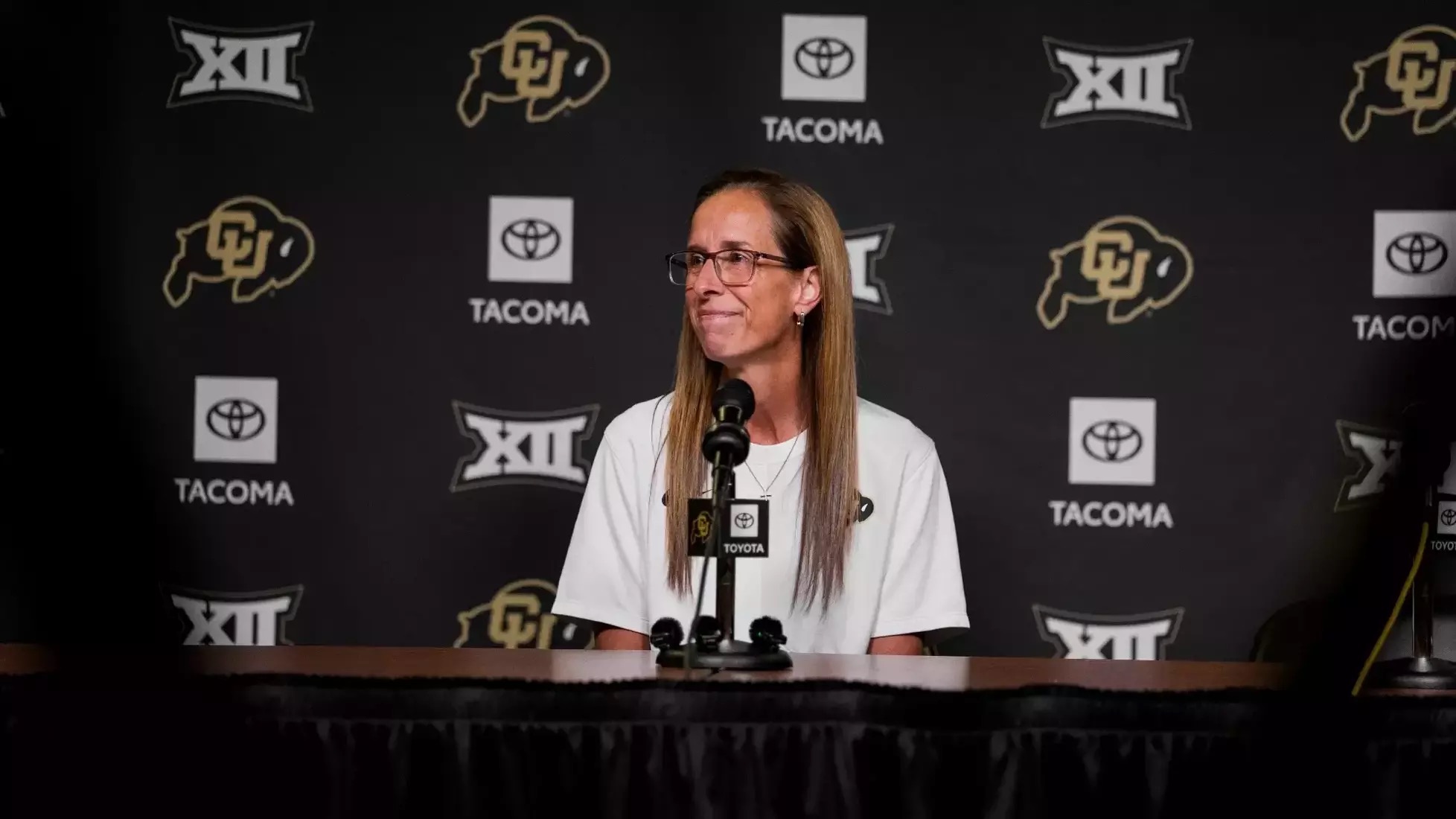
There’s a difference between assembling a good basketball team and building a consistently successful basketball program. The former requires talent, favorable circumstances, and occasionally a little luck. The latter requires establishing an identity that survives graduation, injuries, transfers, conference realignment, and the increasingly chaotic world of college athletics.
Payne has done precisely that.
Colorado has recorded five consecutive 20-win seasons and appeared in four of the last five NCAA Tournaments. The Buffs have remained competitive despite substantial roster changes and a move into a conference that offers very few opportunities to take a night off.
Last season’s 22 victories weren’t the product of extraordinary shooting or overwhelming offensive talent. They were the result of a program that understands how it wants to play basketball and consistently executes that identity.
The Buffs defend. They rebound. They compete. And they generally make opposing teams work considerably harder than they’d prefer.
That matters because Colorado doesn’t need seven newcomers to establish a new culture. It needs them to embrace an existing one.
There’s also something to be said for the university’s confidence in Payne. Her contract extension through 2031 reflects a commitment to the program she’s built, but it also raises an interesting question about what comes next.
Colorado has established itself as a consistent NCAA Tournament participant. That’s no small accomplishment. But can Payne take the next step and turn the Buffs into a regular Big 12 championship contender and second-weekend NCAA Tournament team?
Here’s why I think the answer might be yes. The teams that survive into the second weekend of March generally have something they can rely on when their shots aren’t falling. For Colorado, that something is defense, rebounding, and a willingness to make games uncomfortable.
Payne has already established those qualities. The opportunity now is to add enough offensive consistency to turn close postseason losses into victories. That’s a considerably more manageable challenge than trying to build an entirely new identity from scratch.
No. 1: The Big 12 Might Be Dramatically Underestimating Colorado
Here’s something that caught my attention: Colorado was picked eighth in the preseason Big 12 coaches poll.
Eighth.
That’s an interesting assessment of a program coming off 22 victories, a fourth-place conference finish, four wins over ranked opponents, and another NCAA Tournament appearance.
Now, there are legitimate reasons for skepticism. Colorado lost its leading scorer and a significant contributor on the glass. Seven newcomers will need time to adjust. High school shooting statistics don’t automatically translate into Big 12 success, and transfers who excelled against different levels of competition must demonstrate that they can produce consistently against some of the country’s best teams.
Those are real concerns, and dismissing them would be foolish.
But I also wonder whether the preseason expectations reflect too much attention to what Colorado lost and not enough consideration of what Payne has added.
Greer is a returning All-Big 12 Freshman selection with significant developmental upside. Walker is a proven conference-level leader and defender. Sanders provides another experienced guard if healthy. Reynolds brings impressive rebounding and shot-blocking production. Adler adds size and scoring. Marshall has already earned conference freshman-of-the-year recognition. And Harris arrives with one of the most extraordinary high school shooting resumes you’ll ever see.
That’s not a guarantee of success. But it hardly sounds like a roster destined to struggle in the bottom half of the conference.
Last season, Colorado demonstrated that it could beat the Big 12’s better teams despite substantial offensive limitations. The Buffs defeated TCU, Iowa State, Texas Tech, and Baylor, then came within a point of reaching the Big 12 Tournament championship game.
The question now is whether the improvements to the roster can turn those occasional high-level performances into something more consistent.
And here’s the most interesting part of the entire argument: Colorado doesn’t need to reinvent itself to become a substantially better team. It needs to maintain its defensive identity, improve its shooting, develop a few emerging players, and take better care of the basketball.
None of those developments is particularly unreasonable on its own.
And if several happen simultaneously?
Well, eighth place might look awfully silly by March.
So, How Far Can These Buffs Really Go?
I’m not suggesting Colorado should be considered a national championship favorite. I’m not predicting that seven newcomers will immediately develop perfect chemistry or that a freshman who made 742 three-pointers in high school will suddenly become the second coming of Caitlin Clark.
And I’m certainly not suggesting that losing your leading scorer and one of your best rebounders is somehow an advantage.
But I am suggesting that the gap between last season’s Colorado team and a genuinely dangerous postseason team might be smaller than most people realize.
Consider the possibilities. A three-point percentage that improves from 27.3% to 32% would have produced approximately 71 additional points at last season’s attempt volume. A healthy Kennedy Sanders could provide more consistent perimeter production. A sophomore leap from Greer could give Colorado another reliable scoring option. Reynolds and Adler could help replace Dutat’s rebounding while adding another dimension to the interior defense. Marshall could help offset the loss of Wooten’s scoring. And Harris might finally give opposing defenses a reason to worry about the perimeter.
None of those developments requires a miracle. The challenge, of course, is getting enough of them to happen simultaneously.
My baseline expectation is that Colorado has a legitimate opportunity to win 23 to 25 games, finish in the top four of the Big 12, and return to the NCAA Tournament. That’s the reasonable prediction, the one I’d make if I were trying to convince somebody that I possess sound judgment and a healthy relationship with Colorado athletics.
But the more interesting question isn’t whether the Buffs can make the NCAA Tournament. They’ve already demonstrated they can do that consistently. The question is what happens when a program that already knows how to defend, rebound, and beat ranked opponents finally develops an offense capable of consistently complementing those strengths.
An Elite Eight appearance requires three NCAA Tournament victories. That’s difficult for any program. But Colorado doesn’t have to become the best team in the country to get there. It has to become good enough to win three consecutive games against increasingly difficult opponents.
And with the right draw, improved shooting, a developing star in Greer, and Payne’s established defensive identity, that possibility doesn’t seem nearly as outrageous as an eighth-place conference prediction might suggest.
The Buffs have already proven they can win without shooting. Now imagine what happens if they learn how.
Go Buffs.
More BuffsBlog You Might Have Missed
Both sides of the men’s basketball argument ran earlier this week.
An Optimist’s Preview of the CU Buffs
Chris makes the case that Tad Boyle’s men might be better than people think.
A Pessimist’s Preview of the CU Buffs
John counts eleven newcomers, a transfer class ranked 88th, and says no.
I love that we get the BuffsBlog treatment for women’s hoops. JR Payne has built a program that CU fans should be proud of!
I 100% agree. I think she’s my favorite coach at CU right now. With her husband and lead assistant, Toriano Towns, she’s built a real family cutlture in the program and the young women play hard for her.
I’ve heard through the grapevine that coaches think Mecailin Marshall is the REAL DEAL and will be an All Big 12 caliber player this year. If that’s true, it gives CU a really dynamic backcourt.
Couldn’t have said it better myself.
🙂
Great article, Chris! This is the optimistic take I can get behind. I think you’re right that scoring will improve. My worry is that the defense might not be as stifling as it was. There are a lot of new players that need to learn and buy into JR’s system. But I feel like we can be just as good as last year and one of these years we will break through that 2nd weekend in March. Go Buffs!